

Toyota Corolla Reliability: How Reliable Is the Corolla?
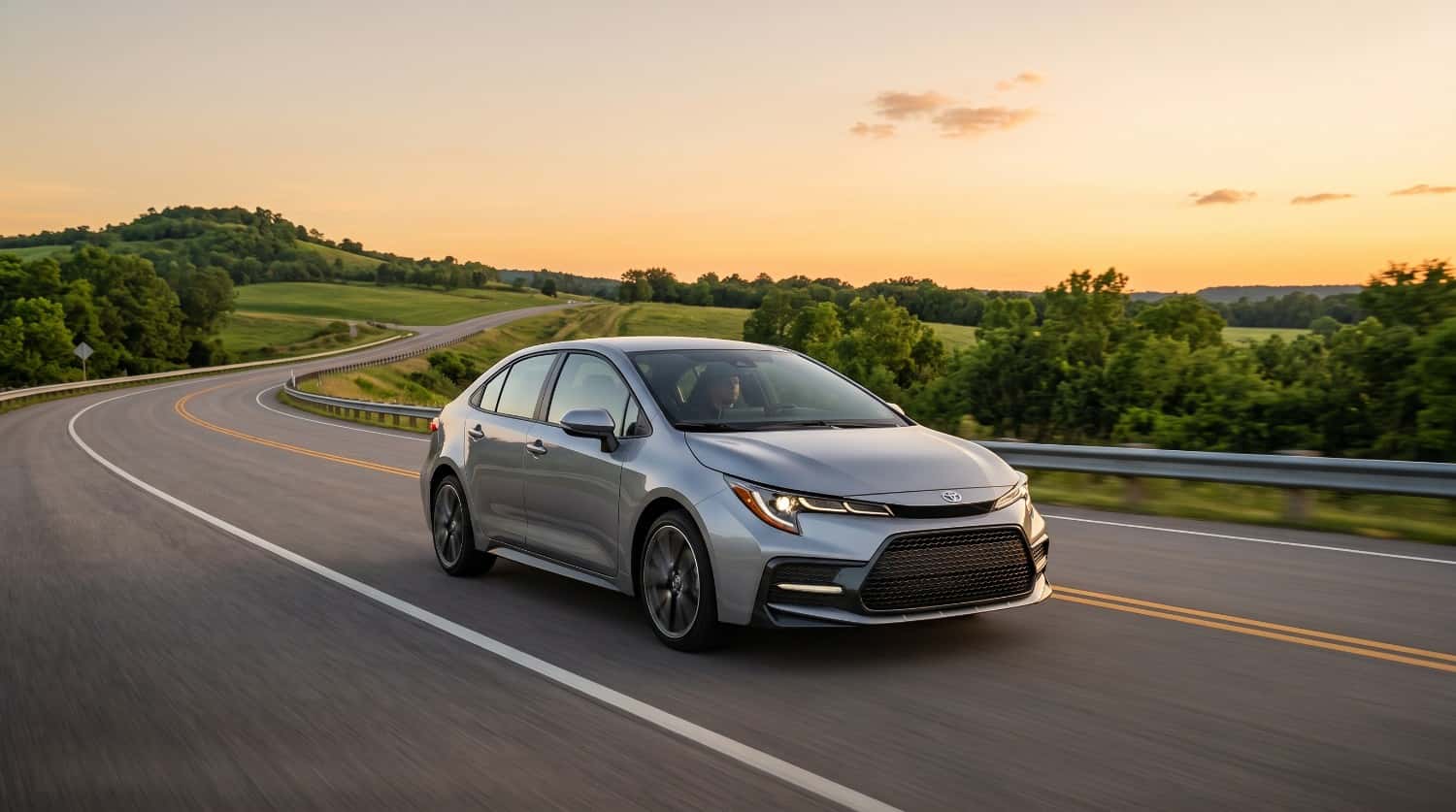
If you’re cross-shopping compact sedans or staring down a used model with 120,000 miles, one question matters most. How does real-world Toyota Corolla reliability actually hold up once the factory warranty expires?
The short answer: it has earned its reputation honestly. But reputation alone doesn’t pay for unexpected shop visits. You need to know what breaks, what lasts, and whether long-term ownership justifies the price tag.
In this guide, we’ll break down realistic lifespan expectations, common mechanical quirks to watch for across recent generations, and how the Corolla stacks up against rivals like the Civic and Elantra.
Before digging into the mechanical details, here is a quick look at how the ownership data shakes out.
Quick Summary The Toyota Corolla consistently ranks among the most reliable compact cars on the road. With routine maintenance, a typical Corolla lasts between 200,000 and 300,000 miles roughly 15 to 20 years of driving. Proven, naturally aspirated engines and simple mechanical layouts make it one of the lowest-risk choices on the new or pre-owned market.
Key Takeaways
- Outperforms most compact competitors in long-term mechanical dependability and resale value.
- Expect 200,000 to 300,000 miles easily with timely fluid and filter changes.
- Minor infotainment glitches and interior trim wear make up most reported complaints.
- Strict 5,000-mile oil change intervals directly dictate high-mileage engine survival.
- Hybrid variants share identical core durability while offering significantly reduced brake wear.
- Factory-trained technicians at James Hodge Toyota handle pre-purchase inspections and warranty upkeep.
Why Is the Toyota Corolla Known for Reliability?
Toyota builds cars around conservative engineering. While other automakers rush untested turbochargers and finicky dual-clutch transmissions into production, Toyota refines proven designs over decades. That cautious philosophy is why any formal Toyota Corolla reliability rating consistently lands near the top of the compact segment year after year.
Ask any veteran service technician what makes these cars tick. They will point straight to the engine bay. Corollas aren’t fast, but their powertrains rarely face extreme thermal or mechanical stress.
Key Factors Behind Corolla Longevity
- Naturally aspirated simplicity: Most gas Corollas avoid small-displacement turbos, significantly reducing internal engine pressure and heat buildup.
- Refined CVT architecture: Modern Toyota CVTs utilize a physical launch gear, eliminating belt slip and heat strain during takeoff.
- Ubiquitous parts availability: Decades of massive production volume keep replacement parts cheap and mechanics familiar with every bolt.
- Low ongoing maintenance costs: Basic fluids, standard spark plugs, and durable wear items keep long-term operating costs minimal.
Has Reliability Changed Across Generations?
The short answer is no, but the types of complaints have shifted. Older ninth- and tenth-generation models were purely mechanical workhorses with almost nothing complex to fail.
Twelfth-generation models introduced modern driver-assistance suites, large touchscreens, and hybrid powertrains. Mechanical foundations like the 2.0L Dynamic Force engine remain rock solid. However, software updates and sensor calibrations now account for a larger share of service visits than engine or transmission repairs ever do. Hybrid variants have proven exceptionally durable, often outlasting standard gas models thanks to regenerative braking reducing brake wear and planetary gearsets replacing traditional friction-based transmissions.
How Long Does a Toyota Corolla Last?
A well-maintained Toyota Corolla typically lasts between 200,000 and 300,000 miles, translating to roughly 15 to 20 years of everyday driving. Many owners push past the 300,000-mile mark without major powertrain failures when following factory fluid schedules. How long does a Toyota Corolla last in real-world conditions comes down almost entirely to preventative maintenance rather than luck.
| Ownership Stage | Typical Mileage Range | What to Expect |
| Early Ownership | 0 – 60,000 miles | Basic routine service only (oil, filters, tire rotations). Minimal wear on brake pads and tires; factory warranty coverage remains active. |
| Mid-Life | 60,000 – 100,000 miles | First major service items arise, including brake fluid, transmission fluid inspections, coolant flushes, and occasional accessory drive belts. |
| High Mileage | 100,000 – 150,000 miles | Suspension wear begins showing (struts, sway bar links). Spark plug replacements and possible minor sensor or alternator servicing become typical. |
| Very High Mileage | 150,000 – 200,000+ miles | Routine fluid vigilance keeps the engine running strong. Expect standard wear items like engine mounts, water pumps, and minor suspension bushings. |
Understanding your expected Toyota Corolla lifespan helps you plan for long-term ownership costs. While the vehicle’s powertrain is notoriously resilient, several core variables determine whether your car sails smoothly into high mileage:
- Maintenance consistency: While Toyota permits 10,000-mile intervals for light highway driving, sticking closer to 5,000 miles in stop-and-go conditions prevents variable valve timing wear and engine sludge.
- Driving environment: Frequent stop-and-go city commuting or rough winter road salt accelerates suspension rust and fluid degradation faster than steady highway cruising.
- Powertrain configuration: Hybrid variants often see double the brake pad life due to regenerative braking, though hybrid battery packs may require servicing near 150,000 miles.
- Model year nuances: Newer models demand precise synthetic oil grades (0W-16 or 0W-8) to protect modern tight-tolerance valve-train components.
Keep in mind that actual lifespan depends heavily on maintenance history and driving conditions; these ranges are general estimates, not guarantees.
Common Toyota Corolla Problems And How Serious They Really Are
No vehicle is completely immune to mechanical hiccups, and the Corolla is no exception. However, documented Toyota Corolla problems overwhelmingly involve minor electrical quirks, interior wear, or routine wear components rather than catastrophic powertrain failures. Most owners will never encounter an engine breakdown or a destroyed transmission during their ownership period.
- Infotainment and Bluetooth glitches: Occasional screen lag, intermittent smartphone pairing drops, or delayed backup camera initialization, often resolved with standard software updates.
- Low-speed CVT shudder: A mild hesitation or surging sensation during low-speed crawling in select model years, typically addressed via computer calibration or fresh fluid.
- Higher oil consumption on older engines: Certain high-mileage older generations can burn oil between standard service intervals, requiring drivers to check dipsticks between changes.
- Premature interior cosmetic wear: Basic cabin materials, steering wheel wraps, or driver seat side bolsters showing visible creasing or scuffing ahead of mechanical wear.
- Suspension creaks and rattles: Aging sway bar bushings and strut mounts drying out over time, producing clunks on rough roads without posing immediate safety risks.
- Minor sensor sensitivity: Adaptive cruise and lane-departure radar sensors occasionally throwing false warnings in heavy snow, driving rain, or direct low-angle sunlight.
The vast majority of these reported Toyota Corolla problems are manageable nuisances rather than road-stranding disasters. When caught during routine multi-point service inspections, small adjustments and fresh fluids prevent minor symptoms from snowballing into expensive mechanical damage.
Are These Problems a Dealbreaker?
In short, not at all. Compared to compact competitors that battle chronic turbo failures, blown head gaskets, or total dual-clutch transmission replacements, the Corolla’s common complaints are remarkably mild. Most items on this list are easy fixes or simple cosmetic wear. If regular oil changes and basic upkeep are maintained, none of these quirks should deter someone from buying a new or used model.
Corolla vs. Other Compact Sedans: How Does It Compare?
The compact sedan class is full of capable daily drivers, but long-term durability separates the contenders from the champions. While alternatives offer sportier handling or flashier cabins, the Corolla consistently holds a top-tier standing for mechanical endurance and low running costs. That is why its overall Toyota Corolla reliability rating remains the benchmark against which rivals like the Honda Civic and Nissan Sentra are evaluated.
| Model | General Reliability Reputation | Common Consideration |
| Toyota Corolla | Widely regarded as the gold standard for long-term mechanical resilience and minimal repair frequency. | Cabin materials and driving dynamics are tuned strictly for utility rather than performance or luxury. |
| Honda Civic | Excellent mechanical longevity and resale value, pairing dependable engines with sharper handling. | Turbocharged variants require strict oil maintenance, and recent models face minor infotainment and steering rack complaints. |
| Nissan Sentra | Improved build quality in recent generations, delivering comfortable seating and competitive pricing. | Historical owner reports often point to long-term CVT durability concerns and faster interior wear over high mileage. |
Is the Corolla Hybrid Just as Reliable as the Gas Model?
Yes, and in some service areas, it is even simpler to maintain. Toyota’s hybrid architecture relies on an electronically controlled planetary gearset (eCVT) rather than traditional belts or clutches, removing several common mechanical wear points.
The traction battery and electric drive motors draw directly on decades of proven Prius technology. Real-world hybrid battery packs routinely reach 150,000 to 200,000 miles or more before needing attention, especially when cooling air vents are kept clean. Add in regenerative braking that drastically extends brake pad life, and the hybrid matches or exceeds standard gas dependability.
How Does Safety Factor Into the Corolla’s Long-Term Value?
Mechanical dependability only covers half the ownership equation. The Corolla backs up its powertrain longevity with standard Toyota Safety Sense, consistently securing top marks from both the IIHS and NHTSA. Active driver assists like pre-collision braking and lane tracing keep daily driving stress-free, while durable chassis architecture ensures structural protection stays intact year after year. For commuters and teen drivers alike, physical safety matches its mechanical resilience.
Is the Toyota Corolla a Good, Reliable Car?
Yes, the Toyota Corolla is widely recognized as one of the most reliable vehicles on the road. It pairs simple, time-tested engine architecture with durable wear components, consistently delivering low annual repair costs. While major mechanical failures are rare, real-world longevity depends heavily on routine upkeep. A well-maintained Corolla routinely surpasses 200,000 miles, making it an exceptionally safe investment across both new and used markets.
Buying or Maintaining a Reliable Corolla in Muskogee
Navigating long-term Toyota Corolla reliability comes down to verifying how the vehicle was treated before you took the keys. If you’re comparing a used Corolla’s mileage against what’s realistic, a quick vehicle history check and inspection can tell you a lot more than the odometer alone. Documented fluid intervals matter far more than whether a car has 45,000 or 85,000 miles.
For drivers around Muskogee, James Hodge Toyota stocks a rotating selection of new, pre-owned, and Toyota Certified Pre-Owned (CPO) Corolla models that undergo rigorous factory mechanical checks before hitting the lot. And if you already own one, our factory-trained service center helps preserve that mechanical lifespan with genuine OEM fluids, precise calibrations, and multi-point inspections.
Whether you’re looking to browse our current Corolla inventory or just need to schedule a milestone service check with our team, we’re here to help you get the most out of every mile.
Conclusion
The Corolla has earned its standing as a dependable daily driver through decades of practical, conservative engineering. But even the best powertrain can’t outrun neglected oil changes or deferred upkeep. How long any specific car lasts ultimately reflects how well its previous owners took care of it.
If you treat a Corolla with basic mechanical respect, 200,000 to 300,000 miles is a realistic target rather than wishful thinking.
If you’re currently weighing your options, take a look through our current new and pre-owned Corolla inventory in Muskogee. Or, if you’re evaluating a used model and want a clear read on its mechanical health, feel free to stop by and talk with our service team.
Frequently Asked Questions
Is the Toyota Corolla a reliable car?
Yes, the Toyota Corolla is considered one of the most reliable passenger vehicles ever produced. Its straightforward mechanical engineering avoids unnecessary turbochargers and finicky dual-clutch transmissions. With exceptionally low breakdown rates and accessible replacement parts, Toyota Corolla reliability remains an industry benchmark for dependable, low-cost daily commuting.
How many miles can a Toyota Corolla last?
A well-maintained Toyota Corolla routinely lasts between 200,000 and 300,000 miles, translating to roughly 15 to 20 years of typical driving. While severe driving habits and neglected oil changes can shorten that window, disciplined owners regularly exceed 300,000 miles without ever needing major engine or transmission overhauls.
What are the most common problems with the Toyota Corolla?
Most reported Toyota Corolla problems are minor and non-mechanical. Typical owner complaints involve occasional infotainment touchscreen lag, low-speed CVT hesitation in select model years, and cosmetic interior trim scuffing. Unlike rivals facing sudden engine or gearbox failures, Corolla quirks rarely leave drivers stranded when addressed during routine checkups.
Is the Corolla more reliable than the Civic or Sentra?
The Corolla generally matches or edges out the Honda Civic in long-term dependability while offering lower average repair bills. Against the Nissan Sentra, the Corolla holds a distinct advantage, primarily because Toyota’s refined CVT architecture and naturally aspirated powertrains suffer significantly fewer mechanical failures over high mileage.
Does the Corolla Hybrid have the same reliability as the gas model?
Yes, the Corolla Hybrid matches the gas model’s durability and often reduces brake wear through regenerative braking. Its electronically controlled planetary eCVT eliminates traditional belts and clutches, while the electric motors and traction battery draw on decades of proven, thoroughly tested Toyota hybrid engineering.
Does regular maintenance really extend a Corolla’s lifespan?
Routine maintenance is the single biggest factor determining whether a Corolla reaches 150,000 or 300,000 miles. Timely synthetic oil changes, clean cooling channels, and fresh transmission fluid prevent internal friction and sludging, keeping the engine and drivetrain operating within tight factory tolerances for decades.
0 comment(s) so far on Toyota Corolla Reliability: How Reliable Is the Corolla?