

Toyota Maintenance Schedule by Mileage & Model (2026)
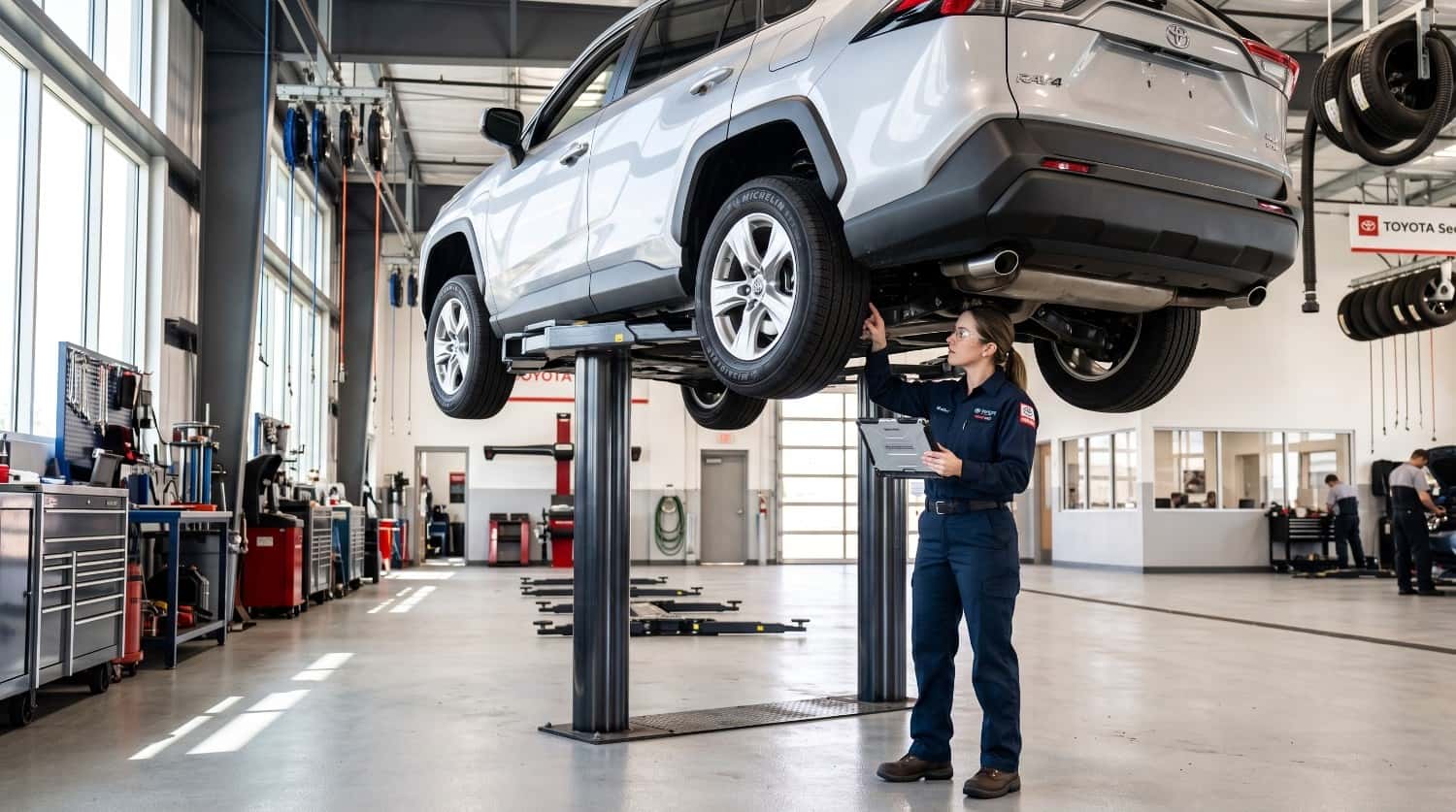
Keeping track of your vehicle’s service needs can feel confusing, especially when deciding whether to follow calendar months or odometer readings. If you’re unsure when your vehicle is due for service, following the official Toyota maintenance schedule ensures you protect your engine and maintain your warranty without paying for unnecessary work.
Whether you drive a daily commuter like the Camry or Corolla, a family crossover like the RAV4 or Highlander, or a truck like the Tacoma or Tundra, Toyota designs every model around standardized factory service milestones.
To help you skip the thick owner’s manual and get straight to the facts, here is a quick summary of what your vehicle needs at every major milestone.
Quick Summary
The official Toyota maintenance schedule recommends servicing your vehicle every 5,000 miles or 6 months, whichever comes first. Minor services occur every 5,000 miles and include tire rotations and fluid inspections, while synthetic oil changes typically occur every 10,000 miles or 12 months. Major inspections and fluid flushes are scheduled every 30,000 miles. Following these factory intervals maintains your warranty, optimizes fuel efficiency, and prevents costly long-term repairs across all Toyota models.
Key Takeaways
- Standard Frequency: Schedule service every 5,000 miles or 6 months, whichever occurs first.
- Model Variations: Hybrid, truck, and performance models have specific additional fluid and filter schedules.
- Severe Conditions: Towing, idling, or dirt roads require more frequent maintenance intervals.
- Core Maintenance: Services alternate between tire rotations, synthetic oil changes, and full inspections.
- Cost Expectations: Annual maintenance costs average $300 to $500 depending on mileage milestones.
- Service Location: Services can be completed at certified dealerships or qualified independent shops.
What Is a Toyota Maintenance Schedule (And Why It Matters)
A Toyota factory maintenance schedule is a roadmap engineered by the manufacturer to keep your vehicle operating at peak efficiency. Rather than waiting for parts to wear down or warning lights to illuminate, Toyota sets these specific intervals based on rigorous testing of fluid lifespans and mechanical wear patterns. Adhering to these milestones ensures your car receives preventive care before minor wear turns into major mechanical damage.
Why sticking to your Toyota scheduled maintenance matters
- Warranty Protection: Safeguards your factory coverage by proving required preventive care was completed.
- Cost Savings: Prevents expensive, unexpected failures by catching minor component wear early.
- Resale Value: Preserves vehicle equity with a documented, complete dealership or shop service history.
- Safety & Reliability: Maintains optimal braking, steering, and engine responsiveness in everyday driving.
Normal vs. Severe Driving Conditions
Toyota’s standard intervals assume “normal” driving, but many drivers unknowingly operate under “severe” conditions. Toyota defines severe driving as frequent trips under 5 miles, extensive idling, driving in extreme hot or cold temperatures, towing heavy loads, or traveling regularly on dusty, unpaved roads.
If your daily route involves these conditions, Toyota recommends shortening key service intervals such as changing engine oil every 5,000 miles instead of 10,000 to offset the added friction, heat, and strain on critical engine components.
Toyota Maintenance Schedule by Mileage: What’s Due When
Toyota structures its service schedule around 5,000-mile or 6-month increments, alternating between safety inspections and major component replacements. Minor services occur every 5,000 miles for basic safety checks and tire rotations, synthetic oil changes happen every 10,000 miles, and comprehensive major inspections occur at 30,000, 60,000, and 90,000 miles. Tracking Toyota maintenance by mileage allows you to budget predictably while ensuring high-wear parts like filters, fluids, and spark plugs are replaced before they cause mechanical issues.
The standard timeline below details what is required across primary Toyota maintenance intervals:
| Mileage / Time | Service Required | Estimated Cost Range |
| 5,000 mi / 6 mos | Tire rotation, brake inspection, wiper blade check, fluid top-off | $0 – $75 (Free under ToyotaCare) |
| 10,000 mi / 12 mos | Synthetic engine oil & filter change, tire rotation, multi-point inspection | $75 – $150 |
| 15,000 mi / 18 mos | Tire rotation, cabin air filter replacement, engine & brake component check | $100 – $225 |
| 30,000 mi / 36 mos | Engine air filter, cabin air filter, oil change, tire rotation, brake fluid flush | $250 – $450 |
| 60,000 mi / 72 mos | All 30k items plus drive belt inspection, transmission fluid check, spark plugs (select models) | $400 – $750 |
| 90,000 mi / 108 mos | All 30k items plus engine coolant replacement, spark plugs, suspension evaluation | $500 – $900 |
| 100,000+ mi | Long-Life coolant flush, timing belt replacement (if equipped), spark plugs, full system checks | $600 – $1,200+ |
Note: Exact intervals vary by model and model year always confirm with your owner’s manual or a certified Toyota service advisor.
What’s Included in 30K / 60K / 90K “Major Services”
While 5,000-mile visits focus on routine tire rotations and visual checks, major milestone services deliver a deeper reset for your vehicle:
- Air & Fluid Flushes: Fresh engine air filters, cabin air filters, and complete flushes for brake fluid and engine coolant.
- Spark Plug Replacement: Replacing iridium or platinum spark plugs to restore optimal ignition, power, and fuel economy.
- Drive Belt & Chain Inspections: Examining serpentine belts and timing chains for wear, proper tension, cracking, or stretching.
- Drivetrain & Brake Overhauls: Comprehensive evaluations of brake pads, rotors, differential fluids, drive shaft boots, and suspension joints.
Toyota Maintenance Schedule by Model: Camry, Corolla, RAV4, Highlander, Tacoma & Tundra
While Toyota maintains consistent 5,000-mile baseline service intervals across its lineup, specific Toyota service requirements vary depending on powertrain and chassis design. Hybrid models introduce high-voltage cooling systems, whereas four-wheel-drive trucks and SUVs require additional fluid servicing for differentials, transfer cases, and propeller shafts.
Understanding your vehicle’s specific Toyota recommended maintenance ensures you do not overlook model-tailored care:
| Model | First Major Service | Oil Change Interval | Special Notes |
| Camry | 30,000 Miles / 36 Mos | 10,000 Miles (Synthetic) | Standard passenger vehicle schedule; focus on cabin/engine air filters and brake inspections. |
| Corolla / Corolla Hybrid | 30,000 Miles / 36 Mos | 10,000 Miles (Synthetic) | Hybrid variants add HV battery air filter cleaning at 20,000-mile increments. |
| RAV4 / RAV4 Hybrid | 30,000 Miles / 36 Mos | 10,000 Miles (Synthetic) | AWD models require rear differential fluid inspections; hybrids feature eAWD electric rear motors. |
| Highlander / Highlander Hybrid | 30,000 Miles / 36 Mos | 10,000 Miles (Synthetic) | Inspect transfer case fluid and rear differential; heavier frame requires attentive brake wear checks. |
| Tacoma | 30,000 Miles / 36 Mos | 10,000 Miles (10k Normal / 5k Heavy Towing) | 4WD models require re-torquing propeller shaft bolts and checking differential/transfer case fluids. |
| Tundra | 30,000 Miles / 36 Mos | 10,000 Miles (10k Normal / 5k Heavy Towing) | Twin-turbo and i-FORCE MAX hybrid setups require strict cooling system inspections and spark plug replacement at 120,000 miles. |
Do Hybrid Toyotas Need Different Maintenance?
Hybrid Toyotas follow the standard 5,000-mile visit cadence, but they incorporate specialized service checks. Technicians regularly inspect and clean the high-voltage battery cooling air filter to prevent overheating. Additionally, Toyota hybrids feature separate inverter cooling systems that require initial fluid replacement at 150,000 miles. Because hybrids utilize regenerative braking to slow the vehicle, mechanical brake pads and rotors experience significantly less physical wear, often lasting substantially longer than those on conventional gas models.
Toyota Maintenance Checklist: What Gets Inspected at Every Visit
Whenever you bring your vehicle in for scheduled care, a certified technician follows a structured Toyota maintenance checklist to evaluate overall mechanical health. Rather than just swapping parts, every service visit involves systematic checks to catch early signs of wear, fluid degradation, or safety hazards before you leave the shop.
Here is what technicians systematically evaluate during a standard service visit:
- Engine Oil & Filter: Draining old oil, replacing the OEM oil filter, and filling with fresh synthetic engine oil.
- Tire Health & Rotation: Rotating tires to ensure even tread wear, checking tire pressure (TPMS), and measuring tread depth.
- Brake System: Inspecting front and rear brake pads, rotors, calipers, lines, and measuring pad thickness.
- Fluid Levels & Condition: Checking and topping off windshield washer fluid, engine coolant, power steering, and brake fluids.
- Battery Performance: Conducting a digital battery load test to measure cold-cranking amps and checking terminal connections for corrosion.
- Cabin & Engine Air Filters: Checking the engine air filter for debris and the cabin air filter for airflow restriction.
- Wiper Blades & Lighting: Testing headlight alignment, signal bulbs, brake lights, and replacing worn wiper blades.
- Belts & Hoses: Inspecting drive belts, radiator hoses, and climate control hoses for cracking, stiffness, or fluid leaks.
- Multi-Point Inspection: Visual assessment of the exhaust system, steering gear, suspension joints, and drive shaft boots.
What Is ToyotaCare?
ToyotaCare is a complimentary factory maintenance plan included with all new Toyota purchases and leases. It covers factory-scheduled maintenance for 2 years or 25,000 miles (whichever comes first), along with 24-hour roadside assistance. Under this plan, your initial 5,000, 10,000, 15,000, and 20,000-mile visits, including oil changes, tire rotations, fluid top-offs, and multi-point inspections, are performed by factory-trained technicians at no out-of-pocket cost.
Signs Your Toyota Needs Service Before Its Scheduled Date
Following a Toyota service schedule provides a strong foundation for preventive care, but fixed intervals cannot predict every road hazard or unexpected component wear. Operating conditions can change rapidly, and minor symptoms often signal developing mechanical issues that require immediate attention.
Bring your vehicle in for inspection promptly if you notice any of these warning signs:
- Dashboard Warning Lights: An illuminated Check Engine, Oil Pressure, or Maintenance Required light.
- Unusual Noises: Squeal or grinding sounds when braking, or whining and knocking from under the hood.
- Steering & Suspension Vibrations: Shaking in the steering wheel or brake pedal during normal driving or deceleration.
- Reduced Fuel Economy: Sudden or gradual drops in miles per gallon without a change in driving habits.
- Fluid Leaks: Puddles or dark spots under the engine bay, differential, or transmission areas.
- Longer Braking Distance: Soft, spongy brake pedal response or noticeable delays when stopping.
Staying faithful to your mileage schedule is crucial, but it should never replace active driver awareness. Addressing sudden symptoms immediately prevents small faults from cascading into severe engine damage, unsafe driving conditions, or unexpected breakdowns.
What Affects Your Toyota Maintenance Cost?
Several variables dictate your total out-of-pocket expenses for any service visit. Larger SUVs and trucks typically require more engine oil and specialized fluids, increasing baseline routine costs compared to compact sedans. Geographic labor rates also vary widely depending on local market conditions. Choosing between an authorized dealership and an independent repair facility impacts labor pricing, as does choosing Original Equipment Manufacturer (OEM) factory parts over lower-cost aftermarket alternatives.
How Often Should You Service a Toyota?
For most modern vehicles, Toyota recommends scheduling a standard service appointment every 5,000 miles or six months, whichever comes first. This routine visit typically includes a tire rotation, safety inspection, and fluid level check. Full synthetic oil changes are generally required every 10,000 miles or 12 months. However, the exact service interval depends heavily on the specific vehicle model and whether the car is operated under normal or severe driving conditions. Always check the factory manual.
Get Your Toyota Serviced by Certified Technicians in Muskogee
Keeping your vehicle running at peak performance requires expert care from professionals who know the brand inside and out. For drivers in the area, you can get reliable care at James Hodge Toyota service center in Muskogee, OK. The facility is staffed by highly experienced, Toyota-trained technicians who use only genuine OEM parts to maintain your vehicle’s factory standards and ensure long-term reliability.
If you’re not sure which service your Toyota is due for, a certified advisor can pull up your exact maintenance history and vehicle specs to recommend the proper timeline. This takes the complete guesswork out of vehicle ownership and ensures you never pay for unnecessary repairs, all while keeping your car safe on the road.
Booking your visit is straightforward and convenient for any schedule. Scheduling online is available for quick access, or you can speak directly to the service department by calling 918-986-7940. Reach out to the service team whenever you are ready to easily book your next routine milestone.
Conclusion
Following a consistent maintenance schedule is one of the most effective ways to preserve your Toyota’s reliability, safety, and long-term resale value. By adhering to factory-recommended intervals and staying proactive between service milestones, you protect your engine against unexpected wear while ensuring your warranty coverage remains intact.
Every model has unique requirements, but keeping up with routine care doesn’t have to be complicated. Whether you are due for a standard 5,000-mile inspection or a major service milestone, staying on track ensures your vehicle continues to perform at its best for years to come.
If you are unsure where your vehicle stands or what service it currently needs, consulting a certified Toyota service advisor can help you clarify your maintenance history and keep your vehicle running smoothly.
Frequently Asked Questions
What is the standard Toyota maintenance schedule?
The standard Toyota maintenance schedule follows a 5,000-mile or 6-month interval cadence, whichever occurs first. Minor visits occur every 5,000 miles for tire rotations and safety inspections, while synthetic oil changes typically happen every 10,000 miles. Major milestone services requiring deeper inspections and component replacements occur every 30,000 miles.
How often should I get an oil change on my Toyota?
Modern Toyota models using full synthetic oil require an oil and filter change every 10,000 miles or 12 months under normal driving conditions. However, if you drive under severe conditions such as frequent short trips, heavy towing, extensive idling, or off-road driving, Toyota recommends changing the oil every 5,000 miles or 6 months.
Does the Toyota maintenance schedule differ for hybrid models?
Hybrid Toyotas follow the same core 5,000-mile interval schedule as conventional gasoline models, including regular oil changes and tire rotations. However, hybrids require additional specialized care, such as inspecting and cleaning the high-voltage battery cooling air filter, checking inverter coolant levels, and inspecting regenerative braking components during standard maintenance visits.
What happens if I miss a scheduled Toyota maintenance visit?
Missing a scheduled Toyota service visit can compromise vehicle performance, accelerate mechanical wear, and lead to higher repair costs down the road. Furthermore, skipping required maintenance may jeopardize your factory warranty coverage, as Toyota requires documented proof of routine service to honor repair claims for mechanical failures caused by neglected maintenance.
Is the Toyota factory maintenance schedule the same as the warranty requirement?
Yes, adhering to the factory maintenance schedule is required to keep your Toyota warranty fully active. While you are not required to complete services at a Toyota dealership, you must follow the recommended maintenance intervals and keep detailed service receipts to prove required preventive care was performed if a warranty claim arises.
How much does Toyota maintenance typically cost?
Routine 5,000-mile Toyota maintenance visits generally cost between $75 and $150, while the first 2 years or 25,000 miles are covered free under ToyotaCare for new vehicles. Major mileage milestone services at 30,000, 60,000, and 90,000 miles typically range from $250 to $900 depending on your vehicle model and required component replacements.
0 comment(s) so far on Toyota Maintenance Schedule by Mileage & Model (2026)