

Car Smell Burnt Rubber: Why Does Your Car Have This Burning Smell?
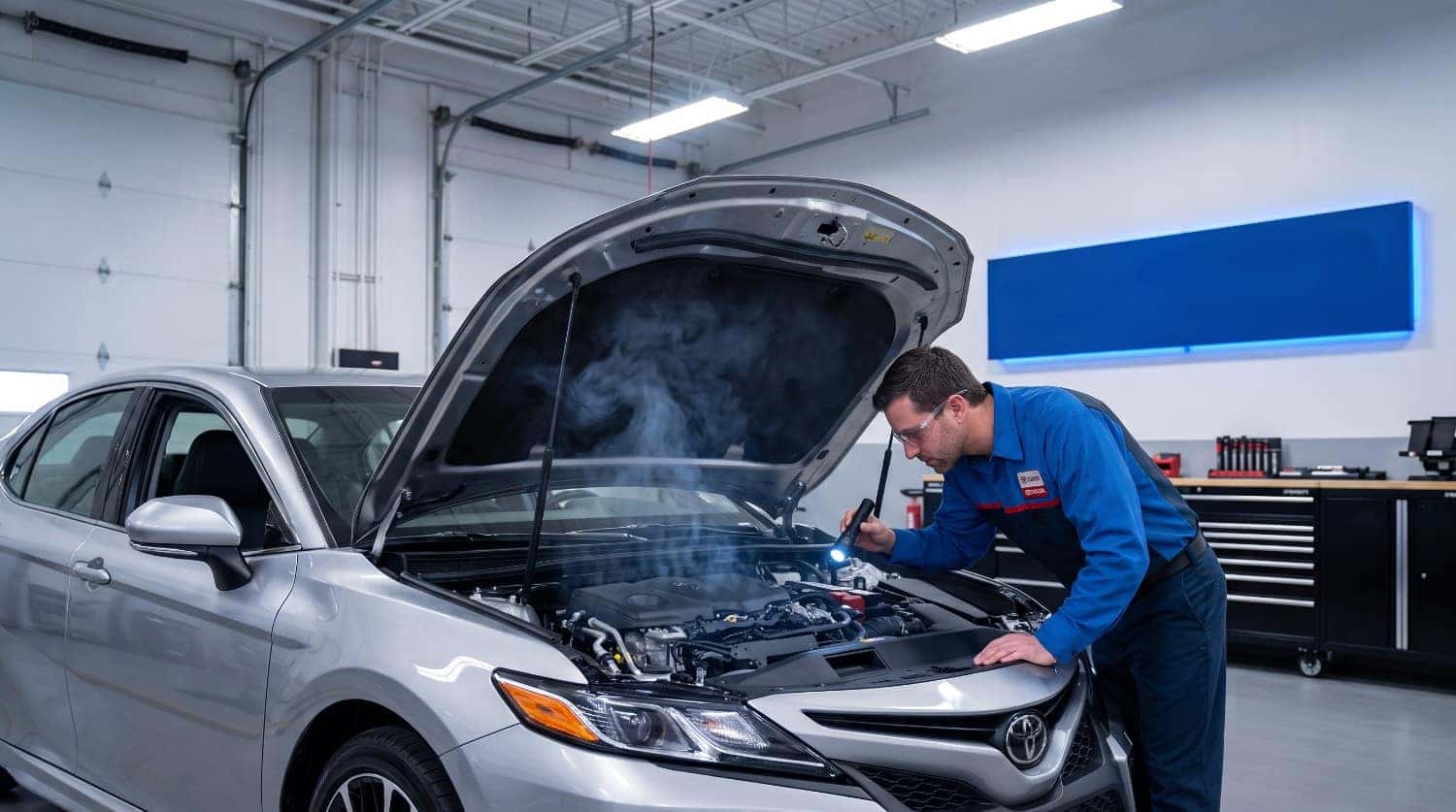
You pull into the driveway, step out of the vehicle, and immediately catch an acrid, unmistakable odor: your car smell burnt rubber. Alternatively, you might be sitting at a red light when a sharp wave of scorched air suddenly drifts through your cabin vents.
It is an unnerving moment, but you do not need to panic right away. A burning rubber odor is a clear friction- or heat-related warning sign, yet the culprit can range from a harmless piece of road debris stuck to your exhaust to a worn serpentine belt or a sticking brake caliper.
Pinpointing the exact issue comes down to a few straightforward clues specifically where the odor is strongest and under what driving conditions it appears. Here is how to track down what is actually causing the smell and what you should do next.
Quick Summary: What Causes a Burnt Rubber Smell in a Car?
A burnt rubber smell in a car is most commonly caused by a worn or slipping serpentine belt dragging against a pulley under the hood. Other frequent culprits include a seized AC compressor clutch, a dragging brake caliper, a slipping manual transmission clutch, or engine fluids dripping onto hot exhaust components. While a faint, momentary odor after heavy driving can be harmless, a strong or persistent smell usually indicates an active mechanical issue that requires immediate inspection to prevent component failure.
Key Takeaways
- Belts Cause Most Odors: A slipping or worn serpentine belt dragging across a misaligned or locked pulley is the leading source of this smell.
- Location Guides Diagnosis: Pinpointing whether the odor emerges from your cabin vents, under the hood, or near the wheels quickly isolates the faulty component.
- Frequency Indicates Urgency: A temporary, faint smell after hard driving is often harmless, but a recurring or intensifying odor demands a mechanical inspection.
- Clutch Smells Differ: A slipping manual transmission clutch produces a distinct scorched-paper or burnt-toast smell that appears exclusively while shifting gears.
- Smoke Demands Action: If the burning odor is accompanied by visible smoke, reduced braking power, or active dashboard warning lights, pull over immediately.
- Inspection Ensures Safety: Simple visual checks can spot melted debris or fluid leaks, but electrical, braking, and accessory issues require professional service bay tools.
Why Does My Car Smell Like Burnt Rubber?
A car smells like burnt rubber because mechanical friction or extreme engine heat is actively degrading a rubber, synthetic, or fluid-coated component. This sharp odor is an immediate physical indicator of excess thermal energy inside your vehicle’s mechanical systems, not a random or harmless interior scent.
When you notice a faint, momentary trace of this smell right after aggressive acceleration, heavy towing, or steep downhill driving, it may simply be temporary thermal stress that dissipates quickly. However, when the burning rubber smell from car systems is strong, pungent, or repeats on regular commutes, an internal part is experiencing ongoing, abnormal friction.
Isolating the issue requires paying attention to where the odor originates and when it occurs. Tracing whether the scent enters through the cabin vents, drifts from under the hood, or radiates from the wheels will point directly to the failing system.
Common Causes of a Burnt Rubber Smell in a Car
Identifying the root cause begins with matching the burning odor to the specific area of your vehicle where it is strongest. Mechanical components, electrical circuits, and high-heat exhaust parts all interact differently under load, creating recognizable symptom patterns.
| Cause | Where You’ll Notice It | Why It Happens |
| Slipping or Worn Serpentine Belt | Under the hood | A loose, misaligned belt or seized pulley creates extreme friction, dragging the rubber belt. |
| AC Compressor or Clutch Failure | Cabin vents (AC running) | A locked clutch or seized internal components force the drive belt to drag and overheat. |
| Dragging Brake Caliper | Near the wheels/tires | A sticking caliper holds the brake pad against the spinning rotor, generating constant friction. |
| Slipping Clutch (Manual Only) | Cabin (when shifting) | Worn paper-based friction material overheats under load, creating a scorched-toast odor. |
| Fluid Leaks on Hot Components | Under hood / Underbody | Motor oil, coolant, or transmission fluid drips onto hot exhaust manifolds or engine blocks. |
| Overheating Electrical Wiring | Cabin vents or under hood | A short circuit or overloaded wire melts its protective plastic and rubber insulation. |
| Foreign Object on Exhaust | Underneath vehicle | Road debris (like a plastic shopping bag) melts directly onto high-temperature exhaust pipes. |
| Tire Rubbing Wheel Well | Wheel well area | Misalignment, damaged suspension parts, or loose fender liners force rubber against metal/plastic. |
Accompanying sensory cues can narrow down the list even faster. A high-pitched squeal or rhythmic slapping sound paired with the odor almost always points to a belt or pulley issue, whereas an acrid burning smell that appears and vanishes rapidly through the air vents often signals an electrical short circuit.
Is a Burnt Rubber Smell in a Car Dangerous?
A burnt rubber smell can range from a minor, temporary annoyance to a critical safety hazard depending on its underlying source and persistence. While a mild, fleeting scent following heavy towing or steep mountain driving may simply be temporary thermal dissipation, a recurring or pungent odor should never be ignored.
Allowing a chronic burning odor to go unchecked can lead to severe mechanical failures and safety risks:
- Braking System Compromise: A sticking caliper keeps continuous pressure on the rotor, overheating brake fluid and causing brake fade, warped rotors, or reduced stopping power.
- Electrical Fire Hazards: Overheating wiring harnesses and melted insulation from a short circuit present an immediate vehicle fire risk.
- Fluid Ignition Risks: Flammable motor oil, transmission fluid, or coolant dripping onto red-hot exhaust pipes can ignite under the hood.
If you encounter any of the following critical warning signs, pull over in a safe location immediately rather than continuing to drive:
- Visible white, gray, or dark smoke rising from under the hood or out of the wheel wells.
- A burning smell that sharpens or noticeably intensifies as you accelerate.
- Active dashboard warning lights (such as the Check Engine, Battery, or Brake system light) triggering alongside the odor.
- A soft, spongy brake pedal or noticeably reduced stopping ability paired with the burning scent.
Burnt Rubber Smell Under the Hood, From the Vents, or Near the Wheels: What It Means
Pinpointing where the burning odor is most concentrated provides the fastest, most reliable diagnostic clue to which vehicle system is under stress. Isolating the physical zone helps narrow down the culprit before opening the hood or scheduling an inspection.
From the Vents / When the AC Is On
If the burnt rubber scent pours directly through the cabin air vents, the issue is typically linked to a failing AC compressor, a seized compressor clutch dragging against the drive belt, or melting electrical insulation. You can confirm this by switching off the air conditioning; if the smell fades shortly after the AC system is powered down, the compressor assembly is the primary suspect.
From Under the Hood
Catching a strong burnt rubber smell under hood components generally points to a slipping serpentine belt, leaking fluids dripping onto hot engine surfaces, or melted road debris stuck against the exhaust manifold. A worn drive belt often gives itself away with a distinct, high-pitched squealing or slapping noise when the engine is idling or accelerating.
Near the Wheels
A sharp, scorching odor radiating from the wheel wells almost always indicates a dragging brake caliper or a partially engaged parking brake that is overheating the brake pads. After coming to a complete stop, you can often identify the problem wheel by safely holding your hand near the wheel rim to check for intense radiant heat.
When Shifting Gears (Manual Transmissions)
If the odor appears exclusively during gear changes, the manual clutch is slipping under load. The friction generates a distinctive scorched-paper or burnt-toast scent as the clutch plate overheats, which is easily confused with burning rubber and is accompanied by engine revs rising without a matching increase in road speed.
Car Smells Like Burning Rubber After Driving: What’s Different?
A burning odor that surfaces exclusively after you have been driving points directly to a component that accumulates thermal energy under continuous operational load. This pattern most commonly indicates a dragging brake caliper generating friction against a spinning rotor, an overworked transmission clutch slipping during gear shifts, or a drive belt slipping under sustained engine speeds.
If your car smells like burning rubber after driving through demanding conditions such as towing a heavy trailer, descending steep mountain grades, or navigating severe stop-and-go traffic in summer heat a faint, one-time scent may simply reflect heavy thermal dissipation. However, if the exact same odor emerges after a standard, low-stress daily commute, an internal mechanical part is experiencing chronic, abnormal friction.
Paying close attention to precisely when the scent appears provides vital diagnostic data. Noting whether the smell peaks immediately following hard braking, after a long highway stretch, or when accelerating from a dead stop allows a technician to pinpoint and resolve the underlying mechanical fault far more quickly.
How Our Service Team Diagnoses a Burnt Rubber Smell
When a vehicle arrives at the James Hodge Toyota service center with a burning odor, our technicians always start by confirming the exact driving conditions and physical location where the scent is strongest. We then perform a methodical visual and mechanical inspection of the serpentine belt, AC compressor assembly, brake calipers, and fluid lines before diagnosing the issue. Because slipping belts, sticking calipers, and dripping fluids can produce nearly identical smells, precise diagnostic verification prevents unnecessary part replacements.
What to Do If Your Car Smells Like Burnt Rubber Right Now
- Pull Over in a Safe Location: Move your vehicle out of active traffic onto a paved shoulder or into an open parking lot. Avoid parking over dry grass, brush, or debris, as extremely hot underbody exhaust parts can ignite flammable materials underneath.
- Shut Down the Engine and Let It Cool: Turn off the ignition immediately to stop the moving drive belts, brake friction, and fluid circulation. Allow the engine bay to cool down for several minutes before attempting to unlatch or lift the hood.
- Conduct a Visual Under-Hood Check: Look for visible wisps of smoke, frayed or glazed drive belts, obvious fluid drips, or road debris caught against the exhaust system. Keep your hands clear of hot engine components and moving assemblies during this visual scan.
- Inspect the Wheels for Excessive Heat: Place your hand near each wheel rim without directly touching the metal to feel for abnormal radiant heat. If one wheel feels significantly hotter than the others, a stuck brake caliper is actively dragging against the rotor.
- Arrange for a Professional Inspection: If the root cause is not immediately visible, or if the acrid odor returns as soon as you resume driving, schedule an inspection. Continuing to operate the vehicle with an unresolved mechanical or electrical issue risks severe secondary damage.
When to Bring Your Car in for a Burnt Rubber Smell
A burnt rubber smell should prompt a professional evaluation whenever the underlying cause is not a simple, visible obstruction like melted road debris. While adjusting or replacing a worn drive belt is typically a straightforward, budget-friendly repair, issues involving braking hardware, electrical circuits, or pressurized fluids demand specialized diagnostic tools to prevent safety risks.
| Symptom | Likely Cause | Needs a Professional? |
| Squealing noise + under-hood smell | Worn or slipping serpentine belt | Yes, but usually a fast and affordable repair. |
| Intense heat or odor near one wheel | Dragging brake caliper / stuck pad | Yes, requires prompt inspection to avoid rotor and brake failure. |
| Odor through vents that flickers rapidly | Overheating electrical wiring / short | Yes, needs immediate diagnosis to mitigate fire hazards. |
| Burning smell strictly during gear shifts | Slipping manual transmission clutch | Yes, requires mechanical assessment of the friction disc and pressure plate. |
Scheduling a multi-point inspection eliminates the risk of misdiagnosis. Because an overheating brake caliper, an electrical fault, and an oil drip onto an exhaust shield can emit nearly identical burning odors, expert verification ensures you address the exact mechanical failure without paying for unneeded parts.
How to Prevent a Burnt Rubber Smell in Your Car
- Inspect Belts Regularly: A worn serpentine belt rarely fails without warning; having a technician inspect belt tension and surface wear during routine oil changes prevents friction slipping.
- Maintain Braking Hardware: Keeping up with scheduled brake pad and rotor maintenance ensures caliper slide pins remain lubricated, preventing pads from dragging against rotors.
- Avoid Riding the Clutch: Operating a manual transmission smoothly without resting your foot on the pedal protects friction plates from overheating under heavy load.
- Address Fluid Leaks Promptly: Fixing minor valve cover, oil pan, or coolant drips early stops flammable fluids from pooling and burning on hot exhaust surfaces.
- Service the AC System: Having your air conditioning compressor and clutch assembly inspected during regular maintenance catches seized pulleys before they damage drive belts.
Why Trust James Hodge Toyota With a Burning Smell Diagnosis?
When you notice a burning rubber odor, figuring out whether it is a quick belt adjustment or an urgent braking issue should not involve expensive guesswork. At the James Hodge Toyota service center, our team starts by evaluating the specific conditions behind your vehicle’s symptoms matching exactly where and when the smell occurs to the correct mechanical system.
We pinpoint the precise root cause before recommending any work, ensuring you never pay for unnecessary parts or labor. If an unusual odor is lingering under your hood or coming through your cabin vents, schedule a service appointment with our team at hodgetoyota.com to ensure your vehicle is safe and performing properly.
Conclusion
A burnt rubber smell is one of the clearest physical warning signs your vehicle can give you, pointing to friction, extreme heat, or fluid contact across your mechanical systems. Whether the root cause is a simple worn drive belt, an overheating brake caliper, or a leaking fluid line, paying attention to where and when the odor appears provides the exact clues needed for an accurate diagnosis.
Never ignore a persistent or intensifying burning odor during your daily drives. Schedule a diagnostic inspection at James Hodge Toyota today.
Frequently Asked Questions
Why does my car smell like burnt rubber?
It indicates excess friction or heat overheating a rubber, synthetic, or fluid-coated part. The most frequent culprit is a slipping or worn serpentine belt dragging against a pulley.
Is a burnt rubber smell dangerous?
It can be dangerous if persistent, as dragging brakes, electrical shorts, and hot fluid leaks carry risks of brake failure or vehicle fires. A brief, mild smell after unusually hard driving is typically harmless.
Why does my car smell like burning rubber after driving?
Operational driving builds heat in struggling components under load. This pattern usually points to a dragging brake caliper, an overworked clutch, or a slipping drive belt.
What does a burnt rubber smell from under the hood mean?
It typically means a slipping drive belt, engine fluid leaking onto hot metal, or road debris melted against the exhaust. A simultaneous squealing noise strongly points to a belt issue.
Why does my car smell like burnt rubber when the AC is on?
It points to a seized AC compressor clutch dragging against the belt, an overheating compressor, or failing electrical wiring. The odor will usually fade when the AC is switched off.
What’s the difference between a burnt rubber smell and a burnt clutch smell?
A slipping manual clutch emits a distinct scorched-paper or burnt-toast smell caused by its friction material, which appears specifically during gear shifts rather than continuous driving.
Should I keep driving if my car smells like burnt rubber?
Do not keep driving if the smell is strong, persistent, or accompanied by visible smoke, dashboard warning lights, or reduced braking performance. Pull over safely and arrange an inspection.
How much does it cost to fix a burnt rubber smell?
Repair costs vary entirely by the cause: replacing a drive belt is relatively quick and affordable, while fixing brake calipers, electrical wiring, or AC compressors requires more labor and parts. A diagnostic inspection provides an accurate quote.
0 comment(s) so far on Car Smell Burnt Rubber: Why Does Your Car Have This Burning Smell?