

2026 Toyota Corolla Gas Mileage: MPG by Trim Level
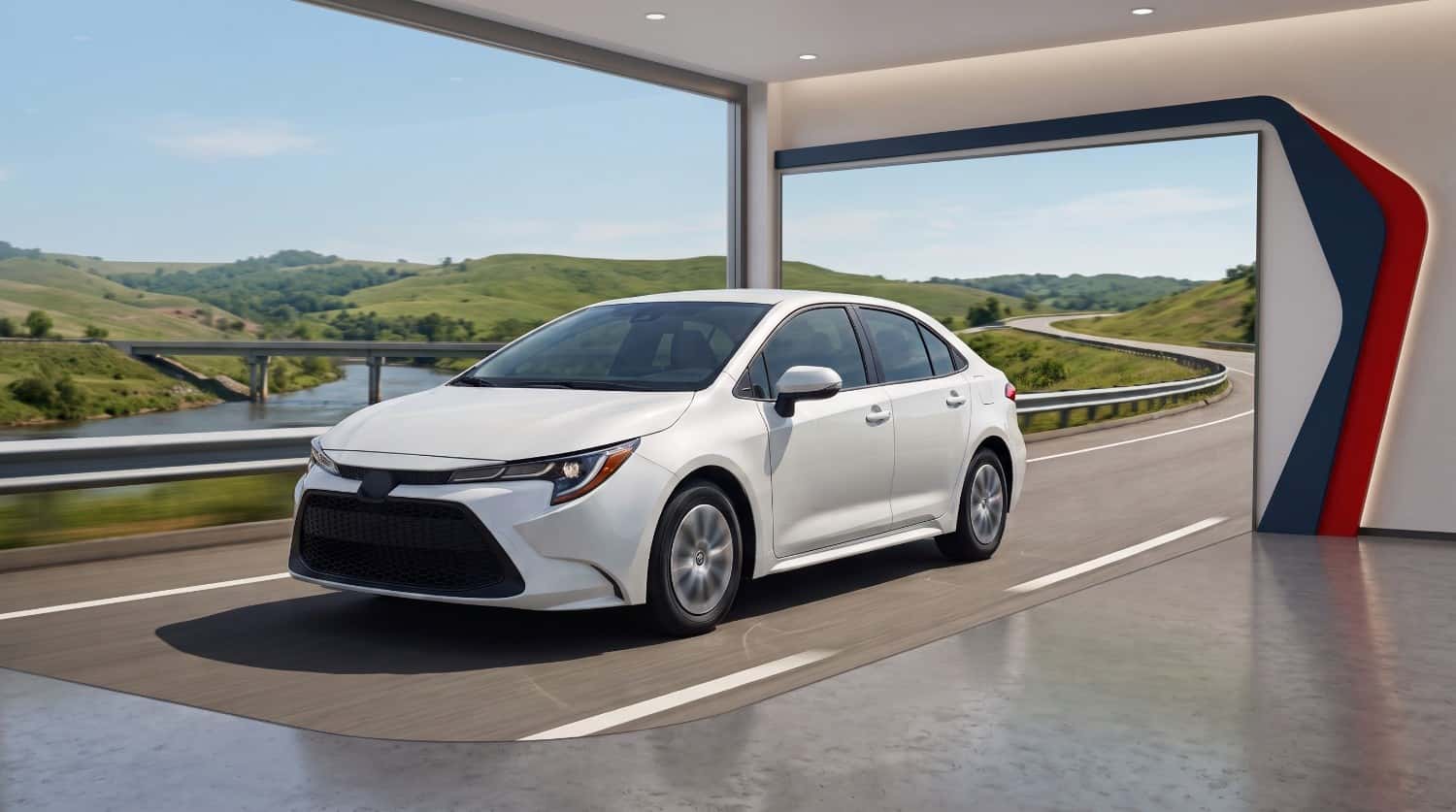
When you’re trying to stretch your monthly budget, deciding between a traditional gas engine and a hybrid usually comes down to simple math: how long will it take for fuel savings to pay off the higher sticker price? With the 2026 Toyota Corolla MPG figures spanning from an efficient 34 combined MPG on gas trims up to a massive 50 combined MPG on the hybrid, that math looks better than ever for commuters.
The gap between the standard 2.0L engine and the 1.8L hybrid system is one of the widest in the compact car class. While the gas model turns in exceptional highway economy, the hybrid turns city stop-and-go driving into a minor expense.
Whether you prioritize low upfront costs or maximum distance between fill-ups, here is exactly what each 2026 Corolla trim delivers at the pump.
Quick Summary
The 2026 Toyota Corolla gas LE achieves an EPA-estimated 32 city / 41 hwy / 35 combined MPG, while the sportier gas SE and XSE trims return 31 city / 38–40 hwy / 34 combined MPG. For maximum efficiency, the FWD Corolla Hybrid delivers up to 53 city / 46 hwy / 50 combined MPG, whereas adding Electronic On-Demand AWD adjusts hybrid output to 47–51 city / 41–44 hwy / 44–48 combined MPG depending on the specific trim.
Key Takeaways
- Best MPG Trim: The FWD Corolla Hybrid LE and XLE lead the entire lineup at an EPA-estimated 50 combined MPG (53 city / 46 hwy).
- Best Gas Trim: The non-hybrid Corolla LE delivers the highest gas-only efficiency at 35 combined MPG (32 city / 41 hwy).
- 13.2-Gallon Range: Every Corolla sedan shares a 13.2-gallon fuel tank, giving the FWD Hybrid a potential maximum range of over 600 miles per fill-up.
- The AWD Trade-Off: Choosing Electronic On-Demand AWD on hybrid models drops combined fuel economy from 50 MPG down to 44–48 combined MPG depending on the trim.
- Real-World Reality: EPA estimates reflect ideal laboratory conditions, so cold winter weather, high highway speeds, and aggressive acceleration will typically lower real-world numbers by 2–4 MPG.
2026 Toyota Corolla MPG by Trim
Fuel economy across the 2026 Corolla lineup varies based on three primary factors: engine type, drivetrain layout, and wheel size. Higher trims like the SE and XSE feature larger, heavier alloy wheels that slightly increase rolling resistance, while adding Electronic On-Demand AWD introduces a secondary electric motor that adds weight and marginally alters highway efficiency.
| Trim Level | Engine Type | Drivetrain | City MPG | Hwy MPG | Combined MPG |
| Gas LE | 2.0L 4-Cylinder | FWD | 32 | 41 | 35 |
| Gas SE | 2.0L 4-Cylinder | FWD | 31 | 40 | 34 |
| Gas XSE | 2.0L 4-Cylinder | FWD | 31 | 38 | 34 |
| Hybrid LE | 1.8L Hybrid System | FWD | 53 | 46 | 50 |
| Hybrid SE | 1.8L Hybrid System | FWD | 50 | 43 | 47 |
| Hybrid XLE | 1.8L Hybrid System | FWD | 53 | 46 | 50 |
| Hybrid LE | 1.8L Hybrid System | AWD | 51 | 44 | 48 |
| Hybrid SE | 1.8L Hybrid System | AWD | 47 | 41 | 44 |
The single biggest efficiency leap in the lineup occurs when stepping from a top-tier gas model to the base hybrid. Moving from the Gas XSE (34 combined MPG) to the Hybrid LE (50 combined MPG) yields an immediate 16 MPG boost, making it the most cost-effective upgrade for high-mileage drivers.
How We Verified These Numbers
All MPG figures listed come directly from official EPA testing published at fueleconomy.gov and cross-checked against Toyota’s technical specifications. Real-world driver feedback is gathered through routine discussions with local Corolla owners visiting the James Hodge Toyota service center in Muskogee. We continuously audit and update this guide whenever Toyota or the EPA issues revised ratings.
Toyota Corolla vs Corolla Hybrid: MPG and Performance Compared
The standard gasoline 2026 Corolla relies on a 2.0L Dynamic Force 4-cylinder engine generating 169 horsepower and 151 lb-ft of torque paired with a Continuously Variable Transmission (CVT). This setup offers traditional, responsive acceleration while averaging a solid 34 to 35 combined MPG across its gas trim levels.
The Corolla Hybrid uses a 1.8L 4-cylinder engine coupled with an electric motor system to generate a net 138 horsepower. It is a self-charging full hybrid system, meaning it recharges its lithium-ion battery through regenerative braking and normal driving with no plug-in required. In return, fuel economy climbs to between 44 and 50 combined MPG depending on whether you choose FWD or Electronic On-Demand AWD.
The real-world decision comes down to upfront investment versus long-term fuel savings. The base Gas LE starts at $22,725, while the Hybrid LE FWD comes in at $24,575 a price difference of $1,850. Determining if that upgrade makes sense depends entirely on your annual mileage and typical commuting routes rather than a blanket rule.
| Powertrain | Horsepower / Torque | Drivetrain | EPA Combined MPG |
| Gas 2.0L | 169 hp / 151 lb-ft | FWD | 34–35 |
| Hybrid 1.8L | 138 hp net | FWD | 46–50 |
| Hybrid 1.8L | 138 hp net | AWD | 44–48 |
2026 Toyota Corolla Fuel Tank Capacity and Range
Every 2026 Toyota Corolla sedan features a standard 13.2-gallon fuel tank regardless of trim or engine choice. Because the tank size remains constant across gas and hybrid variants, the hybrid’s higher MPG figures translate directly into significantly longer driving ranges between gas station visits.
| Powertrain & Drivetrain | Fuel Tank Capacity | Est. City Range | Est. Highway Range | Est. Combined Range |
| Gas LE (FWD) | 13.2 gal | 420 miles | 540 miles | 460 miles |
| Gas SE / XSE (FWD) | 13.2 gal | 410 miles | 500–530 miles | 450 miles |
| Hybrid LE / XLE (FWD) | 13.2 gal | 700 miles | 605 miles | 660 miles |
| Hybrid LE (AWD) | 13.2 gal | 675 miles | 580 miles | 635 miles |
Note: Range estimates are calculated by multiplying EPA MPG ratings by the 13.2-gallon capacity and rounding to the nearest 5 miles.
The standout statistic here is the Hybrid LE FWD’s estimated 660-mile combined range. For long highway trips or weekly commutes, this massive driving range allows you to skip multiple fuel stops compared to standard gas-powered compact sedans.
2026 Toyota Corolla Real-World MPG: What Owners Actually See
In everyday driving, most 2026 Corolla owners report staying within 1 to 3 MPG of the official EPA sticker ratings. However, specific driving conditions and habits can cause that number to fluctuate above or below the laboratory baseline.
- High Highway Speeds: Driving consistently above 70 mph significantly increases aerodynamic drag, reducing hybrid efficiency in particular since the electric motor provides less assistance at sustained cruising speeds.
- Short Trips and Cold Starts: Brief commutes prevent the engine and hybrid battery from reaching optimal operating temperatures, burning extra fuel during the warm-up cycle.
- Trim and Wheel Selection: The larger 18-inch alloy wheels found on SE and XSE trims increase rolling resistance compared to the standard 16-inch wheels on LE models, dropping overall efficiency.
Closing the gap comes down to small adjustments: utilizing built-in Eco Mode, maintaining proper tire pressure, and using gentle throttle inputs when accelerating from a full stop.
Hybrid trims experience the widest real-world MPG variance because the hybrid system delivers its maximum savings in stop-and-go city traffic. Highway-heavy commuters will still enjoy great fuel economy, but won’t reach the peak 50 combined MPG as frequently as city drivers.
What Fuel Does the 2026 Toyota Corolla Use?
Both the gasoline and hybrid 2026 Toyota Corolla models run on standard regular unleaded gasoline (87 octane) no expensive premium fuel is required.
This is a major financial advantage over several turbocharged compact competitors that require 91+ octane fuel to deliver their advertised horsepower and fuel economy. With the Corolla, the efficiency listed on the window sticker is achieved using the lowest-cost gas at the pump.
The math behind avoiding premium fuel adds up fast:
- Per Fill-Up: Premium gas typically costs $0.60 to $0.80 more per gallon than regular unleaded. On the Corolla’s 13.2-gallon tank, using regular saves $7.90 to $10.55 per fill-up.
- Annual Savings: Driving 12,000 miles a year at a 35 MPG average consumes roughly 343 gallons of fuel annually (12,000 ÷ 35). Multiplying 343 gallons by the $0.60–$0.80 premium markup calculates your total yearly discount.
By sticking with regular 87 octane, Corolla drivers save between $205 and $275 every year on fuel costs alone.
Toyota Corolla vs Corolla Cross: MPG Comparison
Despite sharing a famous nameplate, the Toyota Corolla Cross is a completely distinct crossover SUV built on a different, taller platform than the classic Corolla sedan, not simply an upgraded trim level. Because of its bulkier footprint, elevated ground clearance, and increased overall weight, fuel efficiency figures across the Corolla Cross lineup differ noticeably from its sleeker, lower-slung sedan sibling.
| Model | Powertrain | Combined MPG | Body Style |
| Corolla Sedan Gas | 2.0L 4-Cylinder | 34-35 combined | Sedan |
| Corolla Sedan Hybrid | 1.8L Hybrid | up to 50 combined | Sedan |
| Corolla Cross Gas | 2.0L 4-Cylinder | 32 combined | Crossover SUV |
| Corolla Cross Hybrid | 2.0L Hybrid | 42 combined (standard AWD) | Crossover SUV |
If achieving the absolute highest fuel economy is your primary goal and you do not require extra cargo volume or an elevated driving height, the Corolla Sedan Hybrid easily takes the top spot. However, if you prefer the added driving confidence of standard all-wheel drive, superior utility, and extra cargo capacity with only a modest trade-off in fuel economy, the Corolla Cross Hybrid is the better overall fit for your daily commute.
Tips to Maximize Your 2026 Corolla’s Fuel Economy
- Maintain Ideal PSI: Underinflated tires increase rolling resistance and quietly drag down your overall fuel efficiency by up to 3%.
- Engage Eco Mode: Turning on Eco Mode softens throttle response and reduces climate control drag, smoothing out fuel-wasting driver inputs.
- Practice Smooth Acceleration: Easing smoothly onto the accelerator allows the CVT in gas trims and the electric motor in hybrids to keep engine RPMs in their optimal powerband.
- Minimize Excessive Idling: Leaving your engine running while parked burns through fuel with zero miles gained; turning off the ignition during extended waits preserves your MPG.
- Follow Maintenance Schedules: Regular oil changes and fresh air filters ensure the engine breathes easily and operates without parasitic mechanical friction.
- Leverage Low-Speed EV Power: On hybrid models, accelerating gently from a full stop keeps the car in EV mode longer, letting battery power handle initial inertia without burning gasoline.
Which 2026 Corolla Trim Is Right for Your Fuel Budget?
Choose Gas If
- Lower Upfront Cost Priority: You want the lowest possible purchase price, as the Gas LE starts at $22,725 compared to $24,575 for the Hybrid LE.
- Low Annual Mileage: You drive under 8,000 to 10,000 miles per year, which significantly extends the time required to recoup the $1,850 hybrid price premium in fuel savings.
- Highway-Heavy Commutes: Your daily route consists mostly of open highway driving, where the gas model’s 40–41 MPG highway rating narrows the efficiency gap with the hybrid.
- Simpler Traditional Ownership: You prefer a straightforward, single-powertrain setup without secondary electric motors or specialized high-voltage hybrid batteries.
Choose Hybrid If
- City or Stop-and-Go Commutes: Your daily drive involves frequent stop-and-go traffic, where the hybrid’s electric motor handles low-speed acceleration to deliver up to 53 city MPG.
- Maximum Range Per Tank: You want to minimize fuel stops, taking advantage of an estimated 660-mile total driving range on a single 13.2-gallon tank.
- Long-Term Ownership: You plan to keep the vehicle for five or more years, giving you plenty of time to compound your fuel savings and easily recover the upfront cost difference.
- Smoother, Quieter Low-Speed Driving: You value a near-silent cabin experience during neighborhood driving and parking lots, where the car operates almost entirely on electric power.
Why Buy Your 2026 Corolla From James Hodge Toyota?
Every week, shoppers visit our showroom comparing the standard gas Corolla against the Corolla Hybrid. Choosing between 35 combined MPG and 50 combined MPG comes down to your personal driving habits, daily commute distance, and long-term budget goals.
Rather than just handing you a window sticker, our team takes the time to run real numbers based on your actual routes. We walk you through every trim level, outline expected fuel costs, and help you decide whether a gas or hybrid setup fits your lifestyle best.
Ready to see how the 2026 Corolla feels behind the wheel? Explore our latest inventory online or stop by James Hodge Toyota in Muskogee today to schedule your test drive.
Conclusion
The 2026 Toyota Corolla lineup delivers outstanding efficiency across the board, ranging from a reliable 34 to 35 combined MPG on traditional gas trims up to a class-leading 50 combined MPG on the FWD hybrid variants. Deciding between gas and hybrid ultimately comes down to your personal balance of upfront sticker price, annual mileage, and whether your daily driving happens mostly on open highways or in stop-and-go city traffic.
Contact James Hodge Toyota today to schedule your 2026 Corolla test drive and experience this efficiency firsthand.
Frequently Asked Questions
What is the gas mileage of the 2026 Toyota Corolla?
The 2026 Toyota Corolla gas model achieves an EPA-estimated 31–32 city / 38–41 highway / 34–35 combined MPG depending on the trim level. Corolla Hybrid trims deliver up to 53 city / 46 highway / 50 combined MPG.
Does the 2026 Toyota Corolla come in a hybrid?
Yes, the 2026 Toyota Corolla offers a 1.8L hybrid powertrain available in both Front-Wheel Drive (FWD) and Electronic On-Demand All-Wheel Drive (AWD) across multiple trim levels.
What is the fuel tank size of the 2026 Toyota Corolla?
Every 2026 Toyota Corolla sedan features a standard 13.2-gallon fuel tank capacity across all gas and hybrid trim options.
How far can a 2026 Corolla go on a full tank of gas?
A 2026 Corolla gas model can travel between 450 and 460 miles on a full tank, while the Corolla Hybrid FWD can achieve an estimated range of over 650 miles per fill-up.
Which 2026 Corolla trim has the best MPG?
The 2026 Toyota Corolla Hybrid LE and Hybrid XLE FWD trims deliver the highest fuel economy in the lineup at an EPA-estimated 53 city / 46 highway / 50 combined MPG.
What is the difference between Corolla MPG and Corolla Cross MPG?
The Corolla sedan reaches up to 35 combined MPG on gas and 50 combined MPG on hybrid variants, whereas the larger, heavier Corolla Cross crossover SUV gets 32 combined MPG on gas and 42 combined MPG on hybrid models.
What type of gas does the 2026 Corolla need?
The 2026 Toyota Corolla requires standard 87-octane regular unleaded gasoline for all gas and hybrid engines premium fuel is not required.
Is the 2026 Corolla Hybrid worth the extra cost for fuel savings?
Yes, the Corolla Hybrid is worth the additional $1,850 starting cost for drivers who commute frequently or drive in stop-and-go city traffic, as the 15+ MPG increase allows most owners to recoup the price difference within 3 to 4 years.
0 comment(s) so far on 2026 Toyota Corolla Gas Mileage: MPG by Trim Level