

2026 Toyota 4Runner Towing Capacity: What Each Trim Can Pull
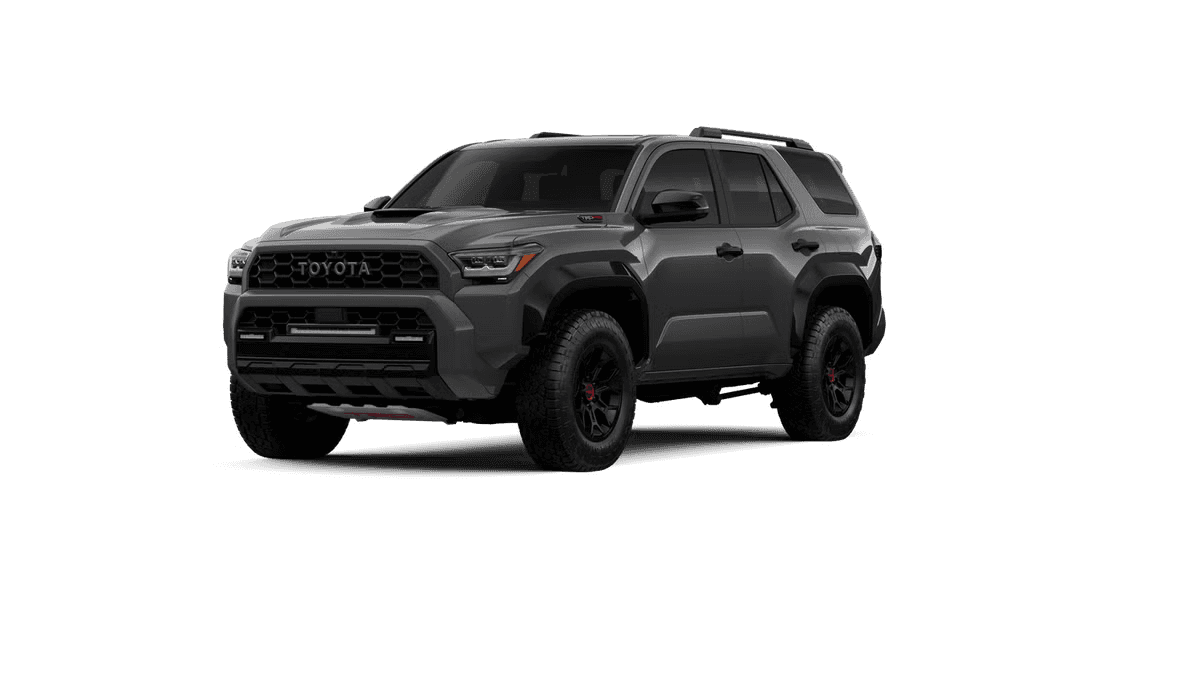
The maximum 2026 Toyota 4Runner towing capacity reaches up to 6,000 pounds, but your actual rating depends on the engine and trim you pick. Standard gas models pull up to 6,000 pounds, while the i-FORCE MAX hybrid tops out at 5,800 pounds on premium grades like TRD Pro and Trailhunter.
That is plenty of muscle for a 20-foot bass boat, an enclosed utility trailer, or a dual-axle camper loaded for the weekend. You can even pull a lightweight open car hauler carrying a compact track car without breaking a sweat.
Picture this: you are hooking up your travel trailer on a Friday afternoon with your family already in the cab. If your tongue weight eats up too much payload, you will feel every bump on the highway. We walk through the exact numbers below so you hitch up safely every time.
Quick Summary: The 2026 Toyota 4Runner tows up to 6,000 pounds when properly equipped. Gas-powered models with the standard 2.4-liter i-FORCE turbo engine reach the full 6,000-pound ceiling. The more powerful i-FORCE MAX hybrid tows 5,800 pounds on top-tier trims due to extra curb weight from heavy-duty trail and luxury equipment. Every model includes a factory Class IV hitch receiver, but your actual limits depend heavily on payload and tongue weight.
Key Takeaways
- Max capacity: Tows up to 6,000 lbs on gas trims and 5,800 lbs on select hybrid builds.
- Powertrain split: SR5 and TRD Sport use gas; Platinum, Trailhunter, and TRD Pro feature standard hybrid powertrains.
- Standard factory gear: A Class IV receiver hitch, 4-/7-pin harness connectors, and Trailer Sway Control come standard.
- Payload math: Tongue weight subtracts directly from cabin payload before passengers and luggage are accounted for.
- Hard limits: It cannot safely tow heavy fifth-wheels, large multi-horse trailers, or travel trailers over 6,000 pounds.
- Best workhorse trim: Pick the TRD Off-Road or SR5 for peak payload headroom and maximum 6,000-pound pulling power.
2026 Toyota 4Runner Towing Capacity by Trim
The 2026 Toyota 4Runner tows up to 6,000 pounds on standard i-FORCE gas trims and select hybrid builds. Premium, hardware-heavy hybrid trims including the TRD Pro, Trailhunter, and Platinum top out at 5,800 pounds. Every grade comes factory-equipped to haul, but powertrain choice, drivetrain options, and added curb weight decide your final rating.
| Trim | Engine | Horsepower / Torque | Drivetrain | Max Towing | Seating | Best For |
| SR5 | 2.4L Turbo i-FORCE Gas | 278 hp / 317 lb-ft | 2WD / Part-Time 4WD | 6,000 lbs | 5 (opt. 7) | Family haulers needing max payload |
| TRD Sport | 2.4L Turbo i-FORCE Gas | 278 hp / 317 lb-ft | 2WD / Part-Time 4WD | 6,000 lbs | 5 | Pavement towing and daily commuting |
| TRD Off-Road | 2.4L Turbo i-FORCE Gas | 278 hp / 317 lb-ft | Part-Time 4WD | 6,000 lbs | 5 | Weekend camp trailers and trailheads |
| TRD Off-Road Premium | 2.4L Turbo i-FORCE (Gas / opt. MAX) | 278 hp / 317 lb-ft (or 326 hp / 465 lb-ft) | Part-Time 4WD | 6,000 lbs | 5 | Long-distance towing with cabin tech |
| Limited | 2.4L Turbo i-FORCE (Gas / opt. MAX) | 278 hp / 317 lb-ft (or 326 hp / 465 lb-ft) | 2WD / Full-Time 4WD | 6,000 lbs | 5 (opt. 7 on Gas) | Lake house boat runs in comfort |
| Platinum | 2.4L Turbo i-FORCE MAX Hybrid | 326 hp / 465 lb-ft | Full-Time 4WD | 5,800 lbs | 5 | Luxury touring with medium campers |
| Trailhunter | 2.4L Turbo i-FORCE MAX Hybrid | 326 hp / 465 lb-ft | Part-Time 4WD | 5,800 lbs | 5 | Heavy overland setups and off-grid gear |
| TRD Pro | 2.4L Turbo i-FORCE MAX Hybrid | 326 hp / 465 lb-ft | Part-Time 4WD | 5,800 lbs | 5 | High-speed desert toys and toy haulers |
Gas Trims (i-FORCE 2.4L Turbo)
Gas-powered trims like the SR5, TRD Sport, and TRD Off-Road deliver the maximum 6,000-pound rating across the board. With 278 horsepower and 317 lb-ft of torque peaking at 1,700 RPM, the 8-speed automatic holds steady highway gears without hunting.
These configurations carry lighter curb weights than hybrid builds. That leaves more usable payload on your door-jamb sticker for passengers, luggage, and tongue weight.
If you plan to carry seven people while pulling a utility trailer, the gas SR5 or Limited is your only path. The hybrid battery occupies the space where that third row would normally fold.
Hybrid Trims (i-FORCE MAX 2.4L Turbo)
Stepping up to the i-FORCE MAX gives you 326 horsepower and an impressive 465 lb-ft of low-end torque. While top grades drop to 5,800 pounds of max towing, the pulling sensation is entirely different.
The electric motor gives you instant off-the-line pull when launching a boat up a slippery ramp. But keep in mind: working that powertrain up steep grades draws down the hybrid battery quickly, meaning the gas engine eventually shoulders the continuous hill-climb work alone.
Added weight from skid plates, rock rails, and luxury sound dampening trims off that final 200 pounds of official capacity. For most drivers pulling sub-5,000-pound travel trailers, the extra low-end torque is worth the small drop on paper.
Toyota 4Runner Towing Capacity by Engine and Drivetrain
The 2026 Toyota 4Runner completely leaves behind the old naturally aspirated 4.0-liter V6 and any rumored V8 options. Instead, Toyota equips the lineup with two modern turbocharged 2.4-liter four-cylinder setups: the standard i-FORCE gas engine and the high-output i-FORCE MAX hybrid.
| Engine | HP | Torque | Max Towing | Fuel Economy (EPA) | Seating | Best Use |
| 2.4L Turbo i-FORCE (RWD) | 278 hp | 317 lb-ft | 6,000 lbs | 20 City / 26 Hwy / 22 Comb | Up to 7 (SR5) | Max payload and long-distance highway hauling |
| 2.4L Turbo i-FORCE (4WD) | 278 hp | 317 lb-ft | 6,000 lbs | 19 City / 25 Hwy / 21 Comb | Up to 7 (SR5/Limited) | Wet roads, boat launches, and light off-pavement towing |
| 2.4L Turbo i-FORCE MAX (4WD) | 326 hp | 465 lb-ft | 5,800–6,000 lbs | 23 City / 24 Hwy / 23 Comb | 5 | Effortless low-end hill climbs and steep grades |
i-FORCE 2.4L Turbo
The standard gas turbo engine produces 278 horsepower and 317 lb-ft of torque, delivering a maximum 6,000-pound tow rating. Compared to the fifth-generation 4.0-liter V6 (which topped out at 5,000 pounds and 278 lb-ft), this turbo delivers peak torque starting down at 1,700 RPM.
You no longer have to listen to the transmission search for gears at high revs on moderate highway inclines. And because gas trims carry less curb weight than hybrids, they leave you more door-sticker payload capacity for passengers and gear.
i-FORCE MAX Hybrid
The hybrid pairs the 2.4-liter turbo with an electric motor integrated between the engine and transmission, pushing output to 326 horsepower and 465 lb-ft of torque. In plain English, that massive wall of low-end torque gets heavy trailers rolling from a dead stop with zero hesitation.
Shoppers often ask why the hybrid’s max tow rating drops to 5,800 pounds on trims like the TRD Pro and Trailhunter despite having 148 lb-ft more torque. The reason comes down to physics: the 1.87-kWh battery pack, electric motor, and heavy-duty armor add curb weight, which eats into the Gross Combined Weight Rating (GCWR).
RWD vs 4WD for Towing
Rear-wheel-drive configurations edge out slightly better fuel economy and marginally higher tongue-weight headroom on the spec sheet. But in real-world towing jobs, four-wheel drive is worth every penny.
Backing a trailer down a wet, algae-covered boat ramp or pulling a camper out of a slick grass campsite will break rear-wheel traction fast. A 4WD system with low range gives you controlled, slip-free crawling power right when you need it most.
Toyota 4Runner Towing Capacity by Year
The sixth-generation redesign brought a meaningful jump in towing performance. For over a decade, fifth-generation 4Runners stayed capped at 5,000 pounds. The modern TNGA-F truck platform raised that ceiling to 6,000 pounds.
| Model Year | Generation | Engine | Max Towing |
| 2026 | 6th Gen | 2.4L Turbo i-FORCE / i-FORCE MAX Hybrid | 6,000 lbs |
| 2025 (Previous Year) | 6th Gen | 2.4L Turbo i-FORCE / i-FORCE MAX Hybrid | 6,000 lbs |
| 2020–2024 | 5th Gen | 4.0L V6 | 5,000 lbs |
| 2010–2019 | 5th Gen | 4.0L V6 | 4,700–5,000 lbs |
(Looking at the previous model year? The 2025 4Runner shares this identical 6,000-pound maximum rating because it introduced the current sixth-generation chassis.)
- Platform rigidity: Shifting to the fully boxed high-strength steel TNGA-F truck architecture delivers the structural stability needed for the extra 1,000-pound rating.
- Powertrain low-end: Swapping the dated 5-speed automatic and 4.0L V6 for an 8-speed automatic with 2.4L turbo power brings torque online much lower in the rev band.
- Tow rating boost: Standard factory limits rose from 5,000 pounds on late fifth-generation models directly to 6,000 pounds on the current build.
Payload, Tongue Weight and GCWR: The Numbers People Forget
Tow ratings make headlines, but payload capacity and tongue weight dictate whether your rig is legal and safe to drive. Your trailer’s weight is only half the math.
| Term | What It Means | Why It Matters |
| Towing Capacity | The maximum total weight of a trailer the vehicle can pull. | Prevents engine, transmission, and frame overload. |
| Payload Capacity | The total weight the SUV can carry inside the cabin and cargo area, including tongue weight. | Overloading strains rear suspension, overheats tires, and degrades braking. |
| Tongue Weight (TW) | The downward force the trailer tongue places on the hitch ball (normally 10% to 15% of total trailer weight). | Too little causes trailer sway; too much unweights the front tires and kills steering control. |
| GCWR | Gross Combined Weight Rating: the maximum allowable total weight of the loaded SUV and loaded trailer combined. | Guarantees the vehicle’s powertrain and brakes can safely stop and control the entire rig. |
The Real-World Payload Math
Conventional trailers require 10% to 15% of their total loaded weight on the tongue for stable highway towing. A trailer without enough tongue weight will sway violently at speed.
Consider this real-world weekend camping trip:
- Trailer: 5,000-lb loaded travel trailer
- Tongue Weight (at 12%): 600 lbs pushing directly down on your hitch
- Two Adults: 350 lbs combined
- Two Kids: 150 lbs combined
- Luggage, cooler, and dog in the cargo area: 175 lbs
- Weight distribution hitch: 75 lbs
Total Payload Consumed: 1,350 lbs.
If your specific 4Runner’s door-jamb sticker lists a maximum payload below 1,350 pounds which is common on heavily accessorized hybrid trims Toyota.com your vehicle is overloaded, even though that 5,000-pound camper sits well below the 6,000-pound maximum tow rating.
Always check the tire and loading information sticker on your driver’s door jamb before hitching up. Tongue weight eats into your cabin payload first, leaving far less room for passengers and gear than most drivers expect.
Toyota 4Runner Towing Package and Tow Hitch Explained
Every 2026 Toyota 4Runner comes straight from the factory ready to work, but the equipment list splits between standard hardware and optional towing technology.
- Integrated Class IV Receiver Hitch: Built directly into the frame crossmember beneath the rear bumper for rigidity and weight distribution.
- Dual Wiring Connectors: Includes both a 4-pin connector (for basic utility trailers without brakes) and a 7-pin RV blade connector.
- Tow/Haul Mode: Adjusts throttle response, holds lower gears in the 8-speed automatic longer, and adds downshift engine braking on steep descents.
- Trailer Sway Control: Senses lateral trailer oscillation via yaw sensors and applies independent vehicle brakes to settle the rig.
| Equipment | Needed? | Why |
| Integrated Receiver Hitch & Wiring | Standard | Factory-rated Class IV frame-mounted 2-inch receiver with 4-/7-pin ports. |
| Tow/Haul Mode & Trailer Sway Control | Standard | Software tuning to control trailer wag and reduce transmission hunting under load. |
| Integrated Trailer Brake Controller (ITBC) | Recommended / Optional | Mandatory for trailers over 3,000 lbs. Available in Tow Tech packages or as a factory accessory. |
| Weight-Distribution Hitch (WDH) | Situational | Keeps the front axle planted when pulling campers over 4,000 lbs, but requires a rigid frame-compatible setup. |
| Extended Towing Mirrors | Recommended | The 4Runner’s stock mirrors sit narrow; clip-on mirrors eliminate blind spots along wide 8-foot trailers. |
If you tow a travel trailer with electric brakes, check your build sheet for the integrated brake controller. If your trim skips it, an aftermarket proportional controller plugs into the pre-wired factory pigtail under the dash.
What Can a 2026 Toyota 4Runner Tow?
With a maximum towing capacity of up to 6,000 pounds, the 2026 Toyota 4Runner easily manages typical weekend toys, utility haulers, and midsize travel trailers. But real-world trailer weights always climb fast once you load fuel, water, and gear.
As a general towing rule, aim to stay under 80% of your maximum tow rating around 4,600 to 4,800 pounds loaded. That cushion protects your transmission from overheating on mountain passes and leaves headroom for unexpected crosswinds.
| Load Type | Typical Loaded Weight | Within the 4Runner Limit? | Notes |
| Bass Boat / Runabout (18–21 ft) | 3,200–4,500 lbs | Yes | Weight includes dual-axle trailer, full fuel tanks, and outboard motor. |
| Teardrop or Pop-Up Camper | 1,800–3,200 lbs | Yes | Effortless pull; negligible aerodynamic drag behind the rear liftgate. |
| Midsize Travel Trailer (20–24 ft) | 4,200–5,600 lbs | Yes (Near Limit) | Check loaded weight, not empty brochure specs; use a sway bar. |
| Open Utility / Landscape Trailer | 2,000–3,500 lbs | Yes | Ideal match; distribute payload evenly over trailer axles. |
| Car on Tow Dolly (FWD Sedan) | 3,800–4,600 lbs | Yes | Front wheels off ground; well within braking and pulling limits. |
| Car on Open Tandem Flatbed | 5,500–6,800 lbs | Risky / No | Steel car haulers weigh ~2,200 lbs empty; quickly exceed ratings. |
| Large Travel Trailer (26+ ft) | 6,200–7,800 lbs | No | Exceeds GCWR, rear axle ratings, and frontal surface area limits. |
Boat Towing
A 6,000-pound rating comfortably handles 18-to-22-foot fiberglass ski boats, pontoon boats, or center-console fishing rigs on tandem-axle trailers. The standard 8-speed automatic keeps engine temperatures cool when pulling up steep highway grades.
When pulling a slippery boat up an algae-coated launch ramp, four-wheel drive makes all the difference. The electric motor on i-FORCE MAX hybrid models delivers immediate off-the-line torque to get heavy hulls moving out of the water cleanly.
Camper and Travel Trailer Towing
The 4Runner easily handles teardrops, A-liners, and single-axle travel trailers. But watch out for RV showroom brochures that list “dry weight.”
According to RV Industry Association standards, dry weight excludes water, propane tanks, batteries, food, and camping supplies. A camper advertised at 4,000 pounds dry easily hits 5,100 pounds at the scale. Keep your dry weight under 4,200 pounds to preserve an 80% safety margin.
Towing a Car (Dolly vs Flatbed)
Towing a commuter car on a two-wheel tow dolly is well within the 4Runner’s comfort zone. A 750-pound dolly carrying a 3,200-pound compact car totals under 4,000 pounds.
Flatbed car haulers are another story. A tandem-axle steel flatbed typically weighs 2,200 to 2,500 pounds empty. Load a 3,600-pound sedan on top, and you immediately hit 6,000 pounds leaving zero margin for tools or cargo in the SUV.
Can a 4Runner Tow 7,000 Pounds?
No. Towing 7,000 pounds directly exceeds the 2026 4Runner’s maximum 6,000-pound rating by a full half-ton. Attempting this creates severe safety hazards and voids your factory powertrain warranty.
The 4Runner’s factory brakes, rear coil suspension, and cooling systems are engineered strictly around the 6,000-pound limit. Pulling 7,000 pounds drastically lengthens stopping distances, risks catastrophic transmission overheating, and creates uncontrollable trailer sway that can overpower Trailer Sway Control. If you need to tow 7,000 pounds or more, step up to a full-size platform like the Toyota Tundra or Sequoia.
Best 4Runner for Towing: Which Trim Should You Pick?
Picking the right 4Runner for trailering comes down to balancing powertrain muscle against your door-jamb payload limits.
| Buyer Type | Recommended Trim | Why It Works | Practical Trade-Off |
| Weekend Boater | Limited 4WD (i-FORCE Gas) | Full-time 4WD provides surefooted grip on wet boat ramps while retaining the full 6,000-lb tow rating. | Firm 20-inch wheels transmit more road feedback over rough pavement. |
| Campers & RVers | TRD Off-Road Premium (i-FORCE Gas) | Max 6,000-lb tow limit, strong rear-axle support, and higher payload headroom than hybrid grades. | Lacks the massive electric low-end crawl torque of the hybrid setup. |
| Overlander | Trailhunter (i-FORCE MAX) | Factory onboard air compressor, high-mount air intake, and 465 lb-ft of torque for rough terrain. | Tow rating drops slightly to 5,800 lbs, and heavy armor reduces cabin payload. |
| Family Hauler | SR5 4WD (i-FORCE Gas) | Keeps the full 6,000-lb rating, offers 3-row seating, and provides the highest payload margin in the lineup. | Skips luxury tech and has basic cloth cabin materials. |
When a 4Runner Is the Wrong Choice
Be realistic about your rig before buying. If you plan to pull a loaded toy hauler, a two-horse trailer with living quarters, or any camper topping 5,500 pounds dry, the 4Runner is simply not enough truck.
At that weight, tongue loads collapse your remaining payload, leaving almost nothing for passengers or luggage. For loads pushing past 6,000 pounds, step straight into a full-size platform like the Toyota Tundra, which offers tow ratings up to 12,000 pounds when properly equipped.
How the 4Runner Compares to Midsize Competitors
The 2026 4Runner easily outpulls its direct adventure rival, the Ford Bronco, which tops out at just 3,500 pounds on standard trims and 4,500 pounds on the specialized Raptor.
It also beats the Jeep Wrangler 4-Door’s 5,000-pound maximum rating by a full 1,000 pounds.
If you want a body-on-frame midsize off-roader that can double as a serious trailer hauler, the 4Runner remains the capability leader in this class.
How We Verified These 2026 4Runner Towing Numbers
A Quick Tip From Our Service & Delivery Specialist
If there’s one thing our team at James Hodge Toyota always double-checks with buyers before they hook up, it’s the door-jamb sticker. Most folks match their camper’s dry weight straight to the 6,000-lb max rating without factoring in tongue weight, passenger bags, or that full cooler in the back.
How Tow Ratings Are Actually Calculated: SAE J2807 Standards
Every 2026 Toyota 4Runner towing capacity figure conforms strictly to the Society of Automotive Engineers (SAE) J2807 standard. This standardized test protocol simulates demanding real-world conditions, including extreme cooling trials up Davis Dam in 100°F heat, emergency 0–60 acceleration tests, highway braking distance evaluations, and aggressive understeer dynamic maneuvers.
When Toyota states a vehicle can tow up to 6,000 pounds “properly equipped,” that means it requires an approved factory receiver hitch, a dedicated trailer brake controller for loads exceeding regional limits (typically 1,000–3,000 lbs), and a verified weight-distribution system when appropriate. It also assumes a baseline driver and passenger weight of 150 pounds each before personal cargo gets loaded into the vehicle.
Trusted Authoritative Sources
Every technical specification, rating, and engineering metric cited across this guide is verified against verified manufacturing and governmental regulatory databases:
- Toyota Motor Sales USA: Official 2026 Toyota 4Runner engineering spec sheets and owner’s manuals.
- U.S. Department of Energy & EPA: Official fuel economy ratings and vehicle classification data.
- National Highway Traffic Safety Administration (NHTSA): Federal motor vehicle safety standards, tire loading regulations, and weight classification limits.
- RV Industry Association (RVIA): Standardized definitions for trailer dry weight, Gross Vehicle Weight Rating (GVWR), and cargo carrying capacity.
Last updated: October 2026. Actual towing capacity varies depending on trim, installed accessories, passenger count, and cargo weight. Always consult your official Toyota Owner’s Manual and inspect the Federal Tire and Loading Information placard located on your specific vehicle’s driver-side door jamb before hitching up.
| Entity | Fact | Source |
| 2026 4Runner Max Tow Rating | Up to 6,000 lbs (gas trims) / 5,800 lbs (select hybrid trims) | Toyota USA Official Specs |
| Testing Protocol | SAE J2807 tow test compliant | SAE International Standard |
| Standard Hitch Hardware | Frame-integrated Class IV receiver hitch | Toyota Technical Sheet |
| Brake Controller Requirement | Mandatory for trailers over 3,000 lbs gross weight | NHTSA Safety Guidelines |
| Target Safety Towing Cushion | Stay at or below 80% of max rating for regular travel | RVIA Best Practices |
Conclusion
Choosing the right rig starts with matching your trailer’s real-world weight to the verified 2026 Toyota 4Runner towing capacity. Gas-powered grades like the SR5 and TRD Off-Road Premium deliver the full 6,000-pound pulling limit alongside maximum cabin payload headroom. If effortless trail climbs and instant off-the-line torque matter most, the i-FORCE MAX hybrid on the Trailhunter or TRD Pro delivers 465 lb-ft of torque with a capable 5,800-pound ceiling.
Every trailer setup carries unique weight distribution and hitch requirements. Browse our incoming 4Runner models online, schedule a test drive to feel how the turbo powertrain handles, or speak directly with a Hodge Toyota specialist to calculate your trailer setup before you buy.
Frequently Asked Questions
How much can the 2026 Toyota 4Runner tow?
The 2026 Toyota 4Runner tows up to 6,000 pounds when properly equipped. Standard gas models pull the full 6,000 pounds, while hybrid grades with heavy trail equipment (like TRD Pro and Trailhunter) top out at 5,800 pounds. Check your door-jamb sticker to confirm the exact payload and towing rating for your specific build.
Does the hybrid 4Runner tow less than the gas model?
On select grades like the Platinum, Trailhunter, and TRD Pro, yes the rating dips to 5,800 pounds. That reduction is not due to a lack of power; the hybrid produces an impressive 465 lb-ft of torque. Instead, the added curb weight from the battery pack and trail armor cuts into the vehicle’s gross weight ratings.
Does every 2026 4Runner trim come with a tow hitch?
Yes, every 2026 4Runner includes a factory-installed Class IV receiver hitch integrated directly into the rear frame. You also get standard 4-pin and 7-pin trailer wiring connectors back by the bumper. If your trailer uses electric brakes, you will just need an integrated or plug-in trailer brake controller.
Can a 2026 4Runner tow a camper?
Yes, a 2026 4Runner can easily pull pop-ups, teardrops, and lightweight travel trailers up to 22 feet. Focus on the camper’s fully loaded gross weight rather than the advertised dry weight. Aiming for trailers that weigh 4,800 pounds or less loaded gives you a safe 20% margin for steep highway grades.
Can a 4Runner tow a boat?
Yes, the 4Runner handles most 18-to-22-foot fiberglass ski boats, pontoon boats, and fishing rigs on dual-axle trailers. Fully rigged with fuel, trailer, and an outboard motor, these setups typically weigh between 3,500 and 4,800 pounds. Choosing a 4WD model provides extra traction on slippery, wet boat ramps.
Which 2026 4Runner trim is best for towing?
The TRD Off-Road Premium or SR5 gas models are the best all-around picks for dedicated towing. They keep the full 6,000-pound rating while offering higher door-sticker payload capacity than hybrid builds. That gives you more usable weight allowance for trailer tongue loads, passengers, and weekend cargo.
How does towing affect 4Runner fuel economy?
Towing will typically reduce your fuel economy by 20% to 35% depending on trailer weight and wind resistance. Boxy travel trailers create substantial aerodynamic drag that forces the turbocharger to work harder at highway speeds. While hybrid models excel in city driving, highway towing mileage will drop noticeably on both powertrains.
0 comment(s) so far on 2026 Toyota 4Runner Towing Capacity: What Each Trim Can Pull