

2026 Toyota 4Runner Gas Mileage: MPG by Trim Level
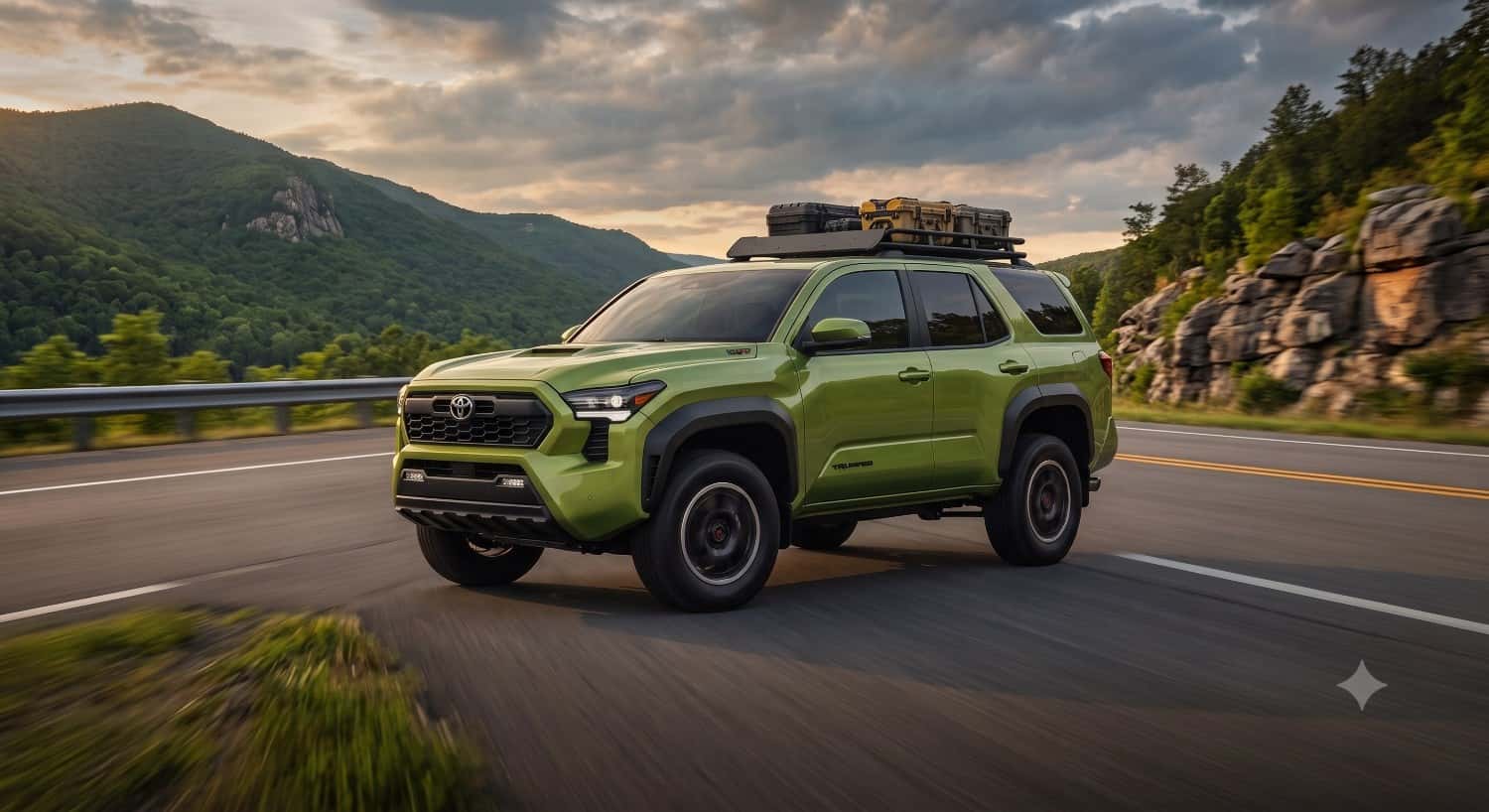
How far will a 4Runner actually go on a tank, and which trim sips the least gas? If you are shopping for a midsize off-road SUV, that is usually one of the first questions on your mind.
For decades, getting into a 4Runner meant accepting a thirsty V6 that loved gas stations as much as dirt trails. The sixth-generation redesign completely rewrites that narrative. Toyota officially retired the old 4.0-liter engine, replacing it with a punchy turbocharged i-FORCE 2.4-liter four-cylinder and an available i-FORCE MAX hybrid powertrain.
The result? You get dramatically more low-end torque without sacrificing your weekly fuel budget. Whether you want a daily commuter like the SR5 or a trail-ready monster like the TRD Pro, understanding how each setup impacts your fuel economy helps you choose the right rig for your driveway.
Quick Summary: 2026 Toyota 4Runner Fuel Economy
The 2026 Toyota 4Runner delivers an EPA-estimated 20 mpg city / 26 mpg highway / 22 mpg combined on standard i-FORCE two-wheel-drive models. Upgrading to standard four-wheel drive adjusts ratings to 19 mpg city / 25 mpg highway / 21 mpg combined. The high-performance i-FORCE MAX hybrid powertrain achieves up to 23 mpg city / 24 mpg highway / 23 mpg combined, giving drivers improved city efficiency alongside 326 horsepower and 465 lb-ft of torque.
Key Takeaways
- Best MPG Trim: Rear-wheel-drive SR5 and TRD Sport models lead the non-hybrid pack with up to 20 city / 26 highway / 22 combined MPG.
- Hybrid Advantage: The i-FORCE MAX setup bumps stop-and-go city efficiency up to 23 city MPG while pouring on an extra 148 lb-ft of low-end torque.
- Fuel Tank Size: Every 2026 trim ships with a 19.0-gallon fuel tank, giving you an estimated cruising range between 399 and 437 miles.
- Real-World Gap: Aggressive all-terrain tires and roof racks on rugged trims like the Trailhunter will trim 1 to 2 MPG off highway cruises.
- Towing Impact: Hooking up a heavy load reduces real-world efficiency significantly, though the hybrid powertrain handles heavy pulls with far less engine strain.
2026 Toyota 4Runner MPG by Trim
Choosing the right trim level comes down to how you balance daily efficiency against trail-ready hardware. Here is how the EPA ratings stack up across the entire 2026 lineup:
| Trim Level | Engine Type | Drivetrain | City MPG | Hwy MPG | Combined MPG |
| SR5 / TRD Sport | 2.4L i-FORCE Turbo | RWD | 20 | 26 | 22 |
| SR5 / TRD Sport | 2.4L i-FORCE Turbo | 4WD | 19 | 25 | 21 |
| TRD Off-Road | 2.4L i-FORCE Turbo | 4WD | 19 | 25 | 21 |
| Limited | 2.4L i-FORCE Turbo | RWD | 20 | 24 | 21 |
| TRD Off-Road i-FORCE MAX | 2.4L Turbo Hybrid | 4WD | 23 | 24 | 23 |
| Limited i-FORCE MAX | 2.4L Turbo Hybrid | Full-Time 4WD | 23 | 24 | 23 |
| Platinum | 2.4L Turbo Hybrid | Full-Time 4WD | 23 | 24 | 23 |
| TRD Pro | 2.4L Turbo Hybrid | 4WD | 23 | 24 | 23 |
| Trailhunter | 2.4L Turbo Hybrid | 4WD | 23 | 24 | 23 |
How We Verified These Numbers
All MPG figures on this page come directly from EPA testing published at fueleconomy.gov, cross-checked against Toyota’s official press specifications. Real-world driving numbers reflect conversations with 4Runner owners at our service center, not independent lab testing. We update this page whenever Toyota or the EPA revises a rating.
Toyota 4Runner i-FORCE vs i-FORCE MAX MPG
When choosing your 2026 4Runner, the biggest fork in the road is deciding between the core i-FORCE gas setup and the upgraded i-FORCE MAX hybrid system. Standard models pair a 2.4-liter turbocharged four-cylinder with an eight-speed automatic, generating 278 horsepower and 317 lb-ft of torque. It is a massive step up from the old V6, giving you better low-end pull while scoring an EPA-estimated 21 to 22 combined MPG depending on whether you choose two-wheel drive or four-wheel drive.
The i-FORCE MAX hybrid takes that same turbocharged foundation and integrates a 48-horsepower electric motor fueled by a 1.87-kWh battery pack. That combination blasts total output to 326 horsepower and a massive 465 lb-ft of torque. While traditional hybrids focus entirely on maximizing fuel economy, Toyota engineered this system primarily for low-speed off-road grunt and heavy passing power.
Even with that huge performance jump, the hybrid still delivers a clear efficiency win in stop-and-go driving. The electric motor handles light low-speed maneuvers, boosting city driving to 23 MPG compared to the 19 MPG you get in standard 4WD gas trims. You can stick with standard gas power on the SR5, TRD Sport, and entry TRD Off-Road trims, while top-tier builds like the Platinum, TRD Pro, and Trailhunter come standard with the i-FORCE MAX hybrid
| Powertrain Option | Horsepower / Torque | Drivetrain | EPA Combined MPG |
| Standard i-FORCE | 278 hp / 317 lb-ft | RWD | 22 MPG |
| Standard i-FORCE | 278 hp / 317 lb-ft | 4WD | 21 MPG |
| i-FORCE MAX Hybrid | 326 hp / 465 lb-ft | Standard 4WD | 23 MPG |
2026 Toyota 4Runner Fuel Tank Capacity and Range
Every 2026 4Runner comes equipped with a 19.0-gallon fuel tank regardless of the engine under the hood. While the capacity stays consistent across the board, your total driving distance per fill-up shifts depending on which powertrain and drivetrain option you select.
| Powertrain & Drivetrain | Fuel Tank Capacity | Est. City Range | Est. Highway Range | Est. Total Combined Range |
| i-FORCE Turbo (RWD) | 19.0 Gallons | 380 Miles | 494 Miles | 418 Miles |
| i-FORCE Turbo (4WD) | 19.0 Gallons | 361 Miles | 475 Miles | 399 Miles |
| i-FORCE MAX Hybrid (4WD) | 19.0 Gallons | 437 Miles | 456 Miles | 437 Miles |
The gap between gas-only and hybrid models really stands out in everyday city driving. Thanks to its electric motor assisting during stop-and-go acceleration, the i-FORCE MAX gives you nearly 76 extra miles per tank in town compared to standard four-wheel-drive gas trims.
On long highway stretches, gas-only two-wheel-drive builds hold a slight edge in total cruising range due to their lighter curb weight and absence of hybrid battery mass.
Toyota 4Runner Real-World MPG: What Owners Actually See
EPA numbers offer a great baseline, but real-world driving always brings extra variables to the table. Based on feedback from drivers stopping into our service bay, most 2026 4Runner owners report staying within 1 to 2 MPG of their sticker window estimates during standard daily driving.
A few critical factors tend to drag real-world numbers down:
- Aggressive Rubber: Swapping stock street tires for heavy 33-inch all-terrains adds rolling resistance, dropping highway economy by roughly 1.5 MPG.
- Roof Gear & Drag: Rooftop tents, crossbars, and cargo boxes create aerodynamic drag that hits your efficiency hardest above 65 mph.
- Extreme Cold: Sub-zero winter starts delay hybrid battery optimal operating temperatures, temporarily leaning more on the gas engine.
You can easily tip the scales back in your favor, though. Engaging Eco Mode smooths out throttle response to prevent unnecessary fuel dumps when pulling away from stoplights. Cruise control on flat highway stretches lets the 8-speed automatic shift into high overdrive gears, where standard i-FORCE models routinely touch 25 to 26 MPG on steady cruises.
Keeping your tires inflated to factory spec and avoiding aggressive speed bursts keeps your real-world numbers right where Toyota promised they would be.
What Fuel Does the 2026 Toyota 4Runner Use?
Both the standard i-FORCE turbocharged engine and the high-output i-FORCE MAX hybrid run on regular unleaded gasoline (87 octane).
Unlike many turbocharged competitors that demand expensive premium fuel just to hit their advertised performance numbers, Toyota tuned this 2.4-liter engine to deliver full power on standard gas. You do not need to spend extra money at the pump for 91 or 93 octane.
Budget Reality: Skipping premium fuel saves you roughly $0.60 to $0.80 per gallon. Over a full 19.0-gallon tank, that keeps $11 to $15 in your pocket every single fill-up.
If you drive 15,000 miles a year, running on regular unleaded saves you around $450 to $600 annually compared to premium-required SUVs. It is one of the easiest ways the 2026 4Runner keeps your long-term cost of ownership down without sacrificing an ounce of capability.
Toyota 4Runner Towing and Fuel Economy
Towing heavy loads is where the 4Runner’s modern engineering shines, but it also alters your efficiency numbers. The 2026 model boasts a maximum towing capacity of up to 6,000 pounds, marking a major upgrade over the fifth-generation’s 5,000-pound limit.
- SR5, TRD Sport, TRD Off-Road, & Limited: Rated up to 6,000 lbs.
- TRD Pro, Trailhunter, & Platinum: Rated up to 5,800 lbs due to added factory off-road and luxury equipment.
Hooking up a loaded camper or boat creates extra aerodynamic drag and weight, which forces the engine to work significantly harder. When towing near maximum capacity, expect your real-world gas mileage to drop by 35% to 50%, settling around 10 to 13 MPG on highway trips.
The i-FORCE MAX hybrid makes a massive difference here. While it will not completely prevent fuel drop-off under heavy loads, its 465 lb-ft of torque provides effortless low-end pulling power. The electric motor takes the brunt of acceleration strain, keeping the engine from revving constantly on steep grades.
Tips to Maximize Your 4Runner’s Fuel Economy
Squeezing every last mile out of your gas tank takes just a few small adjustments in your daily routine:
- Maintain Ideal PSI: Underinflated tires drag down your efficiency. Keep your rubber pumped to the door-jamb specification to minimize rolling resistance.
- Leverage Eco Mode: Dialing into Eco Mode dials back aggressive throttle inputs and optimizes shift points, making smooth city driving second nature.
- Remove Unused Roof Racks: Crossbars and cargo carriers add significant aerodynamic drag. Ditch them when you aren’t hauling gear to save up to 1.5 MPG on the highway.
- Ease Off the Gas: High-rpm launches waste fuel fast. Accelerate smoothly to keep the twin-scroll turbo from spooling up unnecessarily in stop-and-go traffic.
- Limit Excessive Idling: Letting your engine run while waiting in parking lots burns through fuel while netting you 0.0 MPG.
- Stick to Scheduled Service: Fresh engine oil, clean air filters, and proper spark plugs keep the 2.4-liter turbo running at peak thermal efficiency.
Which 2026 4Runner Trim Is Right for Your Fuel Budget?
Finding the right balance between your initial purchase price and long-term fuel costs comes down to how you plan to use your SUV. Aligning your driving habits with the proper powertrain keeps your wallet happy for years to come.
Choose i-FORCE (Gas) If
- Lower Upfront Cost Is Priority: Entry trims like the SR5 and TRD Sport keep thousands of dollars in your bank account upfront compared to hybrid setups.
- You Drive Moderate Annual Mileage: If you log under 10,000 miles a year, the fuel savings of a hybrid take significantly longer to offset the higher vehicle purchase price.
- Simpler Mechanical Layout Suits You: Standard turbocharged models skip the electric motor and high-voltage battery pack, offering a straightforward mechanical setup for long-term ownership.
- Highway Cruising Is Your Main Routine: Non-hybrid two-wheel-drive configurations match or exceed hybrid highway ratings, making them ideal for long interstate commutes.
Choose i-FORCE MAX (Hybrid) If
- Your Daily Commute Is Stop-and-Go: Gaining up to 4 extra MPG in city driving makes a massive difference if you spend hours navigating heavy traffic every week.
- You Plan to Tow or Haul Frequently: The massive 465 lb-ft of torque handles heavy trailers with far less gear-hunting and engine strain.
- You Want Flagship Capability and Tech: Top-tier trims like the Trailhunter and TRD Pro come standard with the hybrid motor alongside peak off-road gear.
- Maximum Cruising Range Matters Most: Pushing your urban range to roughly 437 miles per tank means fewer stops at the pump during busy workweeks.
Why Buy Your 2026 4Runner From Hodge Toyota?
Navigating real-world fuel economy questions is second nature for our team at James Hodge Toyota. Every day, local drivers walk onto our lot asking how these new powertrains handle actual highway commutes and trail rides.
We do not just hand you a spec sheet. Our sales and service specialists live and breathe Toyota engineering. We take the time to walk you through how the new turbocharged setup behaves, compare trim packages side by side, and help you land on the exact model that fits your driving habits and budget.
Whether you want to explore standard i-FORCE options or get behind the wheel of an i-FORCE MAX hybrid, we are here to make your buying experience effortless. Browse our online inventory or give us a call today to map out your next adventure.
Conclusion
The 2026 Toyota 4Runner finally delivers the efficiency long-time fans have been waiting for. Moving to the turbocharged 2.4-liter engine provides punchy power while keeping combined fuel economy between 21 and 23 MPG across the lineup. Standard gas trims give you great highway efficiency and lower entry costs, while the i-FORCE MAX hybrid boosts city driving up to 23 MPG alongside an incredible 465 lb-ft of torque.
Ready to see how the new powertrain feels from the driver’s seat? Contact Hodge Toyota today to schedule your 2026 4Runner test drive.
Frequently Asked Questions
What is the gas mileage of the 2026 Toyota 4Runner?
The 2026 Toyota 4Runner earns up to an EPA-estimated 20 city / 26 highway / 22 combined MPG on standard gas models with rear-wheel drive. Four-wheel-drive gas trims score 19 city / 25 highway / 21 combined MPG, while hybrid models hit up to 23 city / 24 highway / 23 combined MPG.
Does the 2026 4Runner come in a hybrid?
Yes, the 2026 4Runner offers an available i-FORCE MAX hybrid powertrain that pairs a 2.4-liter turbocharged engine with an electric motor. This setup generates 326 horsepower and 465 lb-ft of torque while improving city fuel economy to 23 MPG.
What is the fuel tank size of the 2026 Toyota 4Runner?
Every 2026 Toyota 4Runner trim features a 19.0-gallon fuel tank capacity. This consistent tank size provides an estimated driving range between 399 and 437 miles on a single fill-up, depending on your chosen engine and drivetrain.
How far can a 4Runner go on a full tank of gas?
A 2026 4Runner can travel roughly 399 to 437 miles on a full 19.0-gallon tank during combined driving. Hybrid models offer the longest urban range, stretching city driving to nearly 437 miles per tank.
Which 2026 4Runner trim has the best MPG?
The rear-wheel-drive SR5 and TRD Sport trims offer the best highway fuel economy at 26 MPG. For city driving, hybrid trims like the TRD Pro, Trailhunter, and Limited i-FORCE MAX lead the pack with 23 city MPG.
Does towing affect the 4Runner’s fuel economy?
Yes, pulling a trailer reduces fuel economy on any vehicle, and heavy loads can drop the 4Runner’s real-world efficiency by 35% to 50%. However, the i-FORCE MAX hybrid helps offset engine strain by using its electric motor for low-speed pulling power.
What type of gas does the 2026 4Runner need?
The 2026 Toyota 4Runner runs on standard regular unleaded gasoline (87 octane) for both the gas and hybrid engines. You do not need to purchase expensive premium fuel to reach advertised efficiency or power numbers.
0 comment(s) so far on 2026 Toyota 4Runner Gas Mileage: MPG by Trim Level